
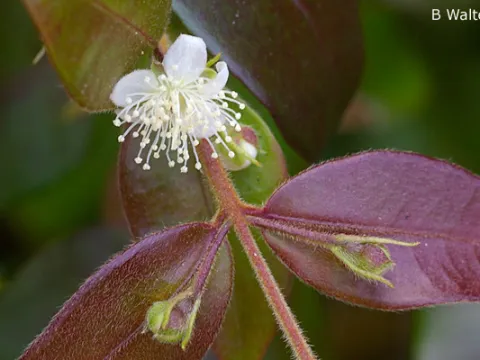
Gossia
Gossia N. Snow et al.
The genus Gossia belongs to the Myrtaceae family, comprising several species of evergreen shrubs and trees native to Australia and Papua New Guinea. These plants are known for their dense foliage and their presence in diverse tropical ecosystems.
What the section contains

Gossia
Botanically, plants in the Gossia genus are characterized by simple, opposite leaves often rich in essential oils and small flowers typical of the myrtle family, usually white or creamy in color.
To cultivate this crop successfully, one must ensure a consistent tropical climate with temperatures between 22°C and 28°C and high humidity levels, which prevent leaf desiccation.
The soil requirements are strict: the plants need well-drained, acidic soil rich in organic matter. They are highly intolerant of waterlogging and saline conditions, which can be fatal to the root system.
Agrotechnical management involves regular moisture monitoring, moderate fertilization during the growing season, and careful pruning to maintain the tree's health and aesthetic shape.
The main threats to the genus Gossia include fungal pathogens like root rot, which typically occur when soil drainage is poor or irrigation levels are excessive.
Pests such as mealybugs and scale insects are common in commercial cultivation, as they thrive on the nutrients found in the stems and leaves of the plants.
Spider mites can also be a significant issue in dry environments with stagnant air, requiring periodic monitoring and proper ventilation strategies to mitigate damage.
Proactive management includes regular spraying with mild fungicides and the use of integrated pest management (IPM) techniques to ensure plant longevity.
Sanitation practices, such as removing fallen leaves and pruning dead wood, are essential to prevent the spread of fungal spores and maintain a clean growing environment.