
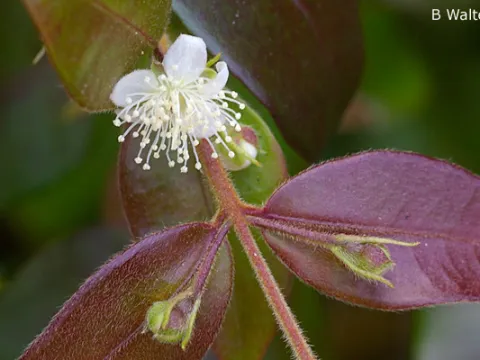
Gossia
Gossia
The genus Gossia belongs to the Myrtaceae family and includes evergreen trees and shrubs. This plant is a close relative of well-known ornamental and fruit-bearing crops such as the eucalyptus and myrtle tree.
What the section contains
 Gossia acmenoides
Gossia alaternoides
Gossia alaternoides
Gossia acmenoides
Gossia acmenoides
Gossia alaternoides
Gossia alaternoides
 Gossia bamagensis
Gossia bamagensis
Gossia bamagensis
 Gossia bidwillii
Gossia floribunda
Gossia floribunda
Gossia bidwillii
Gossia bidwillii
Gossia floribunda
Gossia floribunda
 Gossia gonoclada
Gossia gonoclada
Gossia gonoclada
 Gossia hillii
Gossia hillii
Gossia hillii
 Gossia lewisensis
Gossia macilwraithensis
Gossia macilwraithensis
Gossia myrsinocarpa
Gossia myrsinocarpa
Gossia pubiflora
Gossia pubiflora
Gossia lewisensis
Gossia lewisensis
Gossia macilwraithensis
Gossia macilwraithensis
Gossia myrsinocarpa
Gossia myrsinocarpa
Gossia pubiflora
Gossia pubiflora
 Gossia punctata
Gossia punctata
Gossia punctata
Gossia
In their natural habitat, these plants grow primarily in the tropical and subtropical regions of Australia. They prefer a humid, warm climate and well-drained, fertile soils rich in organic matter.
Botanically, Gossia is characterized by opposite leaves, which often have a leathery texture and contain essential oils. Inflorescences usually form in the leaf axils or at the tips of the shoots, attracting pollinators with a specific aroma.
For successful growth, Gossia requires a consistently high level of light; however, young seedlings need protection from direct sunlight during the acclimation period. Regular watering is a critical factor in preventing the root system from drying out.
In terms of agricultural and landscape use, Gossia is valued for its ornamental appeal in suitable climate zones. Some species produce fruits that may be of interest to local fauna, thereby supporting the biodiversity of the ecosystem.
Like many members of the Myrtaceae family, Gossia can be susceptible to specific pests characteristic of subtropical zones. Mealybugs, which target young shoots and leaves, are among the most common threats.
Leaf-eating insects and aphids can also cause significant damage, especially during drought periods when the plant's immunity is compromised. Regular inspection of the undersides of the leaves helps in early detection of infestations.
Fungal diseases caused by excessive humidity and poor canopy ventilation often manifest as leaf spots or mold. To prevent this, it is essential to maintain proper spacing during planting and ensure adequate airflow.
Root rot is the most dangerous threat related to water stagnation in the soil. Using well-drained substrates and monitoring the irrigation regime are the only effective ways to prevent the plant from dying.
For pest control, it is recommended to use biological control methods or specialized agrochemical products while strictly adhering to dosage guidelines to avoid damaging the sensitive root system of the plant.