
Crocosmia masoniorum
Crocosmia masoniorum (L. Bolus) N. E. Br.
Description
Sowing dates
Crocosmia masoniorum is a perennial cormous plant belonging to the Iridaceae family. In agricultural and ornamental settings, seeds are typically sown in late winter within controlled greenhouse conditions to produce healthy seedlings for spring transplanting.
Corms are planted into open ground once the soil temperature reaches 10–12 degrees Celsius, usually by mid-May. Proper planting depth is crucial, ranging between 8 and 10 centimeters to facilitate robust root establishment.
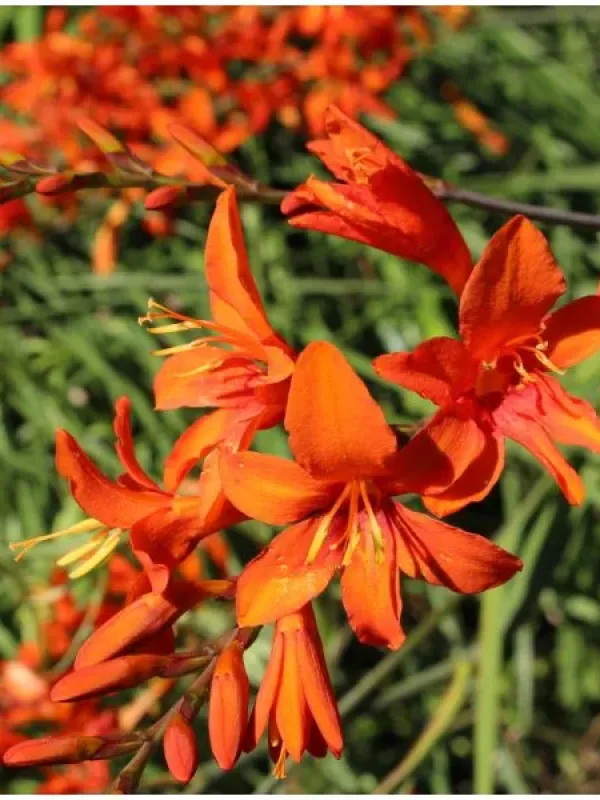
Originating from South Africa, this species thrives in warm, sun-drenched environments. Selecting a site with full exposure to sunlight is essential for the plant to develop its characteristic vibrant orange-red flower spikes effectively.
Vegetative propagation via the division of corm clusters is a highly efficient method for maintaining consistent genetic traits. This procedure is performed in early spring during the routine division and replanting of established clusters.
Spacing recommendations suggest leaving 15–20 centimeters between individual plants to ensure sufficient nutrient access and air circulation. This spatial arrangement is vital for preventing humidity-related stress and potential disease outbreaks.
Growing requirements
The plant demands fertile, loose, and well-draining soil to perform optimally. Maintaining a neutral or slightly acidic pH level is ideal; however, poor drainage leading to waterlogged soil must be strictly avoided to prevent corm rot.
Regular irrigation is required during the peak vegetative stage and flower development, but practitioners should avoid over-saturation. Mulching is highly recommended to regulate soil temperature and retain moisture during peak summer months.
Systematic fertilization with balanced mineral compounds is required every two weeks during the growing season. This ensures the production of strong, sword-like foliage and encourages a more spectacular and sustained blooming period.
In colder hardiness zones, providing winter protection with straw or peat is necessary to prevent freeze damage to the underground corms. In extreme climates, lifting the corms for indoor storage at 5–7 degrees Celsius is standard practice.
- Requirement for fertile, well-draining soil.
- Preference for full sun exposure.
- Consistent application of potassium-rich fertilizers.
Yield
Crocosmia masoniorum is primarily utilized in landscape architecture, ornamental gardening, and the cut-flower industry. The economic value is determined by the number of flower spikes per clump, which can range from 5 to 10 in optimal conditions.
The flowering season spans from mid-summer through early autumn, providing significant aesthetic value during the late-season landscape transition. Its status as a cut flower is bolstered by its long vase life and striking color.
The plant exhibits high reproductive capacity by producing daughter corms, which allows for consistent renewal and expansion of the cultivation site. This feature is particularly beneficial for commercial plant nurseries.
Intensive farming techniques allow producers to achieve high-quality cut flowers with stems reaching 60–80 centimeters in height. Such quality is critical for maintaining market demand within the floral distribution sector.
The durability of the plant during post-harvest handling is a key logistical advantage. Properly treated stems retain their ornamental appeal for up to two weeks, which is highly advantageous for commercial retail operations.
Main diseases and pests
Spider mites represent a primary pest threat, especially during hot and arid climate conditions. These pests feed on leaf tissue, resulting in chlorosis and stunted growth; systemic acaricides are necessary for effective population control.
Fungal pathogens such as Fusarium and various soft rots are common, especially in environments with poor drainage. These diseases cause darkening of the corm tissue and eventual wilting of the vegetative plant body.
Thrips can cause significant damage to the flower buds, affecting the overall presentation and marketability of the spikes. Regular scouting and preventative insecticide applications are recommended to preserve the visual quality of the crop.
Mole crickets pose a direct threat to the corms by feeding on underground plant structures, which creates open wounds prone to secondary bacterial infections. Soil-applied baiting systems remain the most effective control measure.
Disease management relies heavily on the use of clean, pathogen-free planting stock and strict crop rotation protocols. Vigilant monitoring and timely removal of infected individuals prevent the spread of soil-borne pathogens across the plantation.