
Crocosmia aurea
Crocosmia aurea (Pappe ex Hook.) Planch.
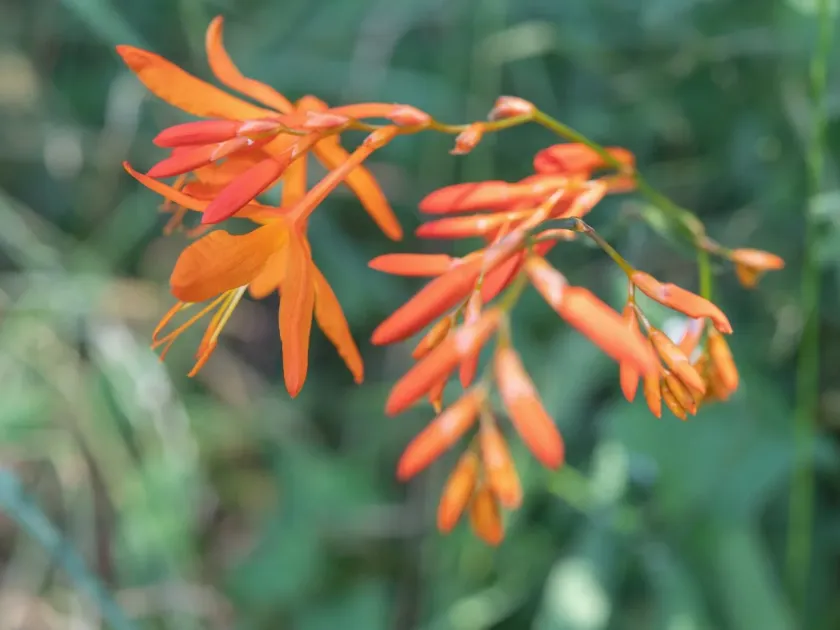
Description
Sowing dates
Planting of Crocosmia aurea corms should take place in spring, once the soil has warmed sufficiently, typically in late April or early May when the risk of frost has passed.
For colder regions, it is recommended to start corms indoors in pots a month before the planned outdoor planting date to extend the growing season and ensure earlier blooms.
Corms should be planted at a depth of 7 to 10 centimeters, depending on the size of the corm and the soil texture, ensuring they are placed root-side down in the hole.
Spacing is essential for the healthy development of this plant; aim for 15–20 centimeters between individual corms to allow for air circulation and nutrient access.
Since the species is a perennial that multiplies by forming offsets, provide enough space during the initial planting to accommodate the expansion of the clumps over time.
Growing requirements
Crocosmia aurea, belonging to the Iridaceae family and originating from Southern Africa, thrives in positions that receive full sun for at least half of the day.
The soil must be fertile, well-draining, and rich in organic matter; stagnant water is detrimental to the corms and often leads to root rot during dormant seasons.
A slightly acidic to neutral pH level is ideal for the successful cultivation of this plant, promoting robust root growth and vibrant foliage development.
Regular watering is necessary during the active growth phase, especially during hot and dry summer spells, but it is vital to avoid waterlogging the root zone.
While the plant is hardy in many climates, it benefits from a layer of mulch or protection in regions where winter temperatures drop significantly below freezing.
Yield
The primary use of Crocosmia aurea is ornamental, where it serves as a stunning structural element in borders, flower beds, and wild-style landscaping projects.
Its floral stems are highly valued in the floristry industry due to their exceptional longevity when cut, making them perfect for decorative bouquets and arrangements.
The plant produces distinct, golden-yellow trumpet-shaped flowers in late summer, providing a bright visual highlight to the garden when other species begin to fade.
The species demonstrates a high rate of multiplication, producing numerous offsets every season, which allows for the rapid expansion of planting stock for commercial growers.
When maintained properly, the plant consistently provides a high yield of high-quality inflorescences, provided the clumps are divided every 3 to 4 years to prevent overcrowding.
Main diseases and pests
The plant is susceptible to fungal infections such as fusarium wilt and gray mold, which are often triggered by excessive soil moisture and poor ventilation in the canopy.
Root pests, including wireworms and mole crickets, pose a significant threat to the corms, often causing stunted growth or total failure of the plant in the field.
Occasional infestations of spider mites or thrips can occur, especially in dry, hot weather, feeding on the leaves and reducing the overall vigor and aesthetic appeal of the plant.
Proactive management includes the treatment of corms with systemic fungicides prior to planting and ensuring crop rotation cycles to reduce the accumulation of soil-borne pathogens.
Regular inspection of the foliage throughout the growing season helps in identifying early signs of pest pressure, allowing for timely application of targeted organic or chemical controls.
Harvesting
Harvesting of corms for winter storage should be carried out in October, after the first frost has caused the foliage to yellow and the plant to enter dormancy.
The lifting process must be performed carefully with a spade to avoid mechanical damage, as wounds on the corm surface are primary entry points for storage diseases.
After lifting, corms should be cleaned of loose soil and cured in a cool, shaded area with good airflow for several days to harden the outer skin before storage.
Store the cleaned material in crates filled with dry peat or sand at a steady temperature between 5 and 7 degrees Celsius to ensure longevity and viability.
Periodic checks during winter storage are necessary to remove any rotting corms, ensuring the health of the remaining stock for the upcoming spring planting season.