
Dangleberry
Gaylussacia frondosa
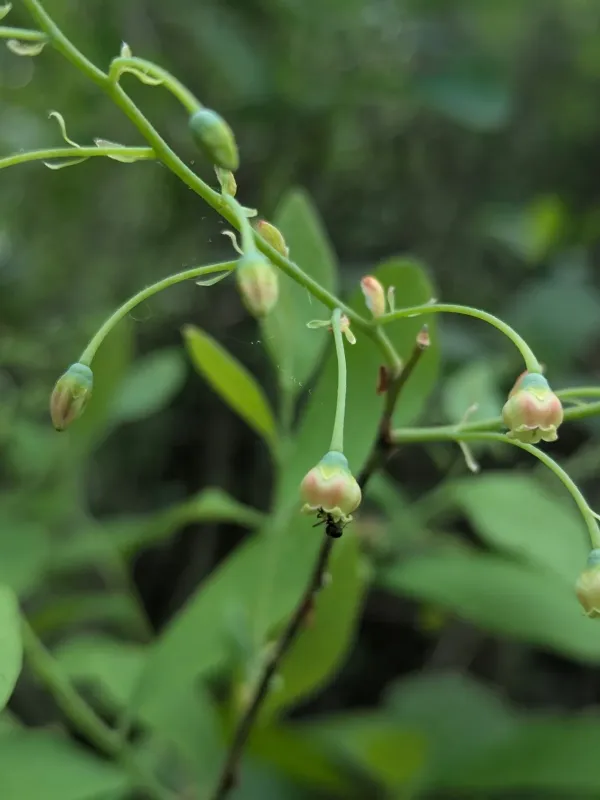
Description
Growing requirements
Dangleberry (Gaylussacia frondosa), also known as the blue dangleberry, is a deciduous shrub belonging to the Ericaceae family. It is a close relative of the highbush blueberry and shares similar ecological preferences.
Native to the eastern United States, this shrub thrives in forest understories and damp, acidic landscapes. Its adaptability to such specific environments makes it an interesting niche crop for specialized berry producers.
The plant requires acidic, well-draining soil rich in organic matter. A pH range between 4.5 and 5.5 is crucial for optimal growth, mirroring the requirements of other acid-loving commercial berry species.
Dangleberry plants perform best in climates with consistent moisture. While they are hardy, providing supplemental irrigation during dry spells ensures robust vegetative growth and higher berry production.
The fruit of the dangleberry is a dark blue, sweet berry that is edible and highly prized by wildlife and foragers. In a commercial context, these berries can be utilized for jams, jellies, and fresh culinary applications.
Main diseases and pests
Root rot is the most common threat when the plant is grown in soil that lacks proper drainage. Maintaining healthy aeration at the root zone is the primary defense against these fungal pathogens.
Insects such as aphids and various beetles can occasionally cause damage to foliage. Integrated pest management strategies are recommended to maintain plant health without compromising the quality of the harvested fruit.
Fungal leaf spots can occur if the planting site lacks proper airflow or is prone to high humidity. Regular pruning helps to open the canopy and ensure the plant stays healthy throughout the growing season.
Birds are significant consumers of dangleberries and can rapidly strip a plant of its ripe fruit. Netting is often necessary to protect the harvest and ensure that the yield remains profitable for the grower.
Nutrient deficiencies, particularly involving iron, can lead to leaf chlorosis in alkaline or non-ideal soil conditions. Regular monitoring of the soil profile and the application of ericaceous fertilizers are essential maintenance tasks.