
Spiny poison pea
Gastrolobium spinosum
Description
Growing requirements
The Spiny poison pea (Gastrolobium spinosum) belongs to the Fabaceae family. It is a distinctive shrub native to the southwestern regions of Australia, where it has evolved to thrive in nutrient-poor soils.
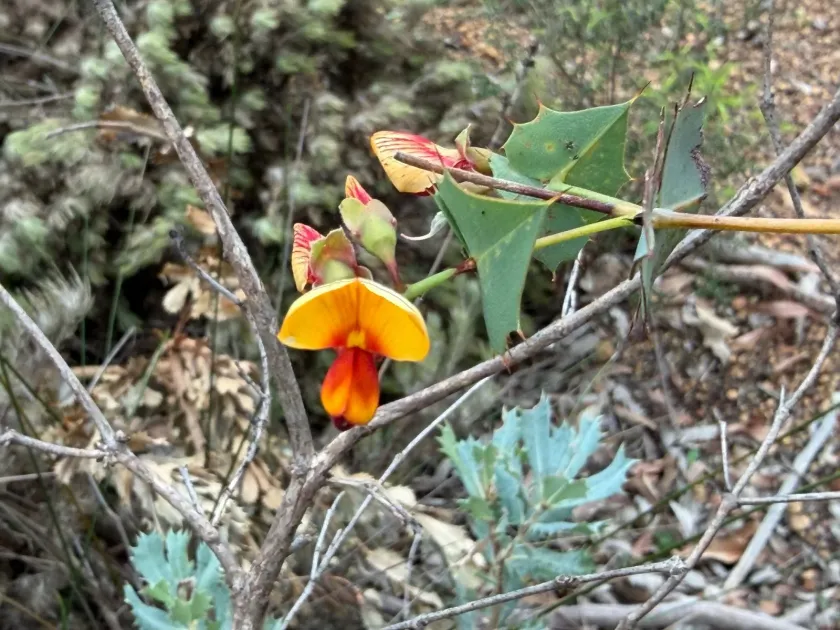
Botanically, it is known for its spiny, sharp leaves that serve as a defense mechanism and a strategy to minimize water loss. The plant produces attractive flowers during its bloom cycle, which spans late winter to early spring.
This species requires full sun exposure and extremely well-drained soil. It is highly sensitive to waterlogging, which often leads to rapid deterioration and death of the root system in non-native environments.
The climate requirements include a Mediterranean-style pattern, characterized by warm, dry summers and mild, wet winters. Protection from heavy, consistent rainfall is essential for the long-term health of the shrub.
Agricultural use of Gastrolobium spinosum is limited to ornamental landscaping and ecological research. It is generally not cultivated for commercial agricultural production due to its specialized environmental needs and inherent toxicity.
Main diseases and pests
The primary threat to the Spiny poison pea is the water mold Phytophthora cinnamomi, which causes fatal root rot. This pathogen thrives in moist soil conditions, making drainage critical.
A significant biological feature of the plant is its high toxicity to livestock, as it contains monofluoroacetate. This makes it an undesirable plant for grazing areas, posing a severe risk to domestic animals.
Occasional infestations of sap-sucking insects, such as aphids, can occur in poorly ventilated garden settings. Maintaining a healthy balance and dry foliage helps to minimize these risks.
The plant is not commonly susceptible to major agricultural pests, as it is protected by its own chemical defenses. However, site preparation must include careful eradication of weeds to prevent root competition.
Farmers and gardeners are advised to avoid over-fertilizing this species, as high phosphorus levels can cause severe toxicity to the plant itself, leading to stunted growth or premature wilting.