
Gastrolobium grandiflorum
Gastrolobium grandiflorum
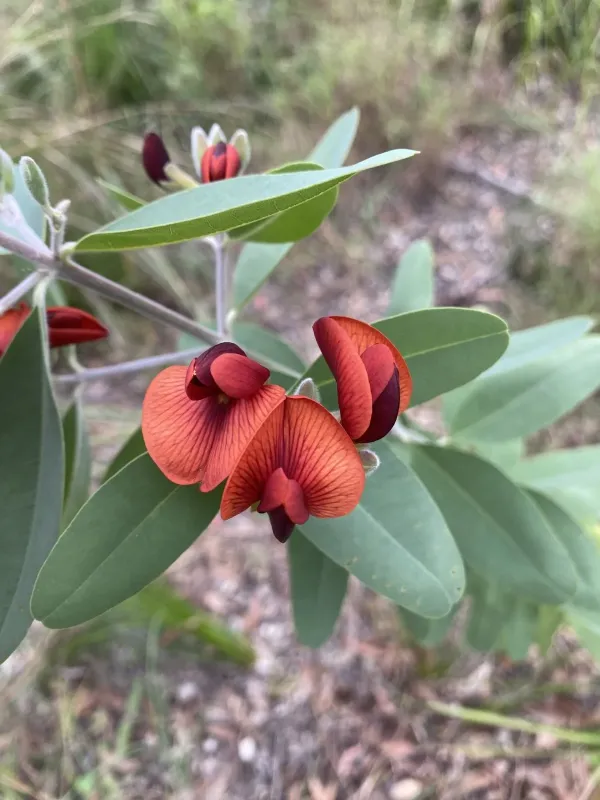
Description
Growing requirements
Gastrolobium grandiflorum belongs to the Fabaceae family and is native to the northern and central regions of Australia.
The plant is typically found in arid environments, thriving on sandy or rocky soils that offer excellent drainage conditions.
It is well-adapted to high-temperature climates and prolonged drought periods, reflecting its resilience as a xerophytic shrub.
Botanically, it features distinctive showy orange-red flowers and rigid, simple leaves that help the plant minimize water loss.
In terms of agriculture, this species is considered a hazardous invasive weed rather than a crop, posing significant risks to livestock management.
Main diseases and pests
The primary concern regarding this plant is its extreme toxicity, as it contains fluoroacetate which is lethal to sheep and cattle.
There are no significant pests or diseases known to threaten this species, as its chemical composition acts as a potent natural deterrent.
Agricultural control strategies focus primarily on eradication methods such as mechanical removal or controlled burning to clear pasture land.
Livestock producers must strictly monitor grazing areas to ensure no contact occurs between the animals and the plant foliage.
The persistence of this plant in nature is high due to its lack of natural predators and its ability to recover from environmental stress.