
Hedge bedstraw
Galium mollugo L.
Description
Growing requirements
Hedge bedstraw (Galium mollugo L.) is a perennial herbaceous plant belonging to the Rubiaceae family. Native to Europe, Western Asia, and North Africa, it is widely recognized for its robust growth habit and adaptability to diverse environmental settings.
The crop thrives in well-drained, fertile loamy soils that maintain consistent moisture levels. It demonstrates excellent winter hardiness, allowing it to survive in colder climates while maintaining its biological viability for the following growing season.
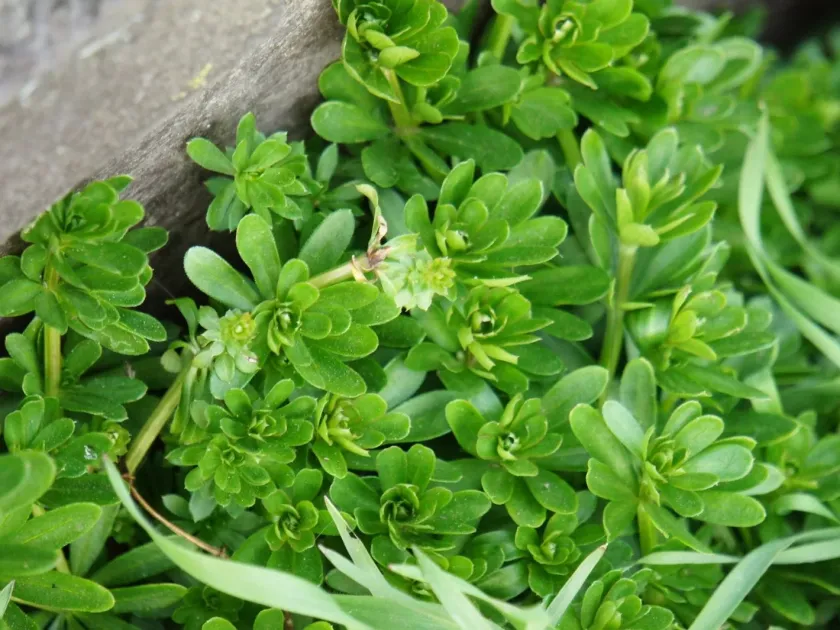
Morphologically, the plant features smooth, branched stems that can reach lengths of up to one meter. Its leaves are arranged in whorls, and it produces abundant small, white flowers during the summer months, which is a key trait of the genus.
Agronomically, Hedge bedstraw is utilized primarily as a valuable component in forage production. Its inclusion in pastures and hay meadows contributes to the nutritional diversity of animal feed, making it a functional plant in sustainable land management.
Beyond agriculture, the plant is valued for its phytochemical composition. It has a long history of use in herbal medicine, primarily for its diuretic and anti-inflammatory properties, serving as a raw material for various natural health products.
Main diseases and pests
The primary pathological threats include fungal infections like powdery mildew, which often develop during periods of high humidity and poor ventilation. Proper planting density and field management are critical to mitigating these risks.
Insect pests such as leaf beetles can impact plant vigor by consuming the foliage. Growers should implement regular field inspections and integrated pest management (IPM) strategies to ensure crop health and productivity.