
Rough bedstraw
Galium asprellum Michx.
Description
Growing requirements
Rough bedstraw (Galium asprellum) is a herbaceous perennial plant belonging to the Rubiaceae family. Native to North America, it is naturally adapted to moist, shaded, and semi-shaded environments, often occurring in wetland margins.
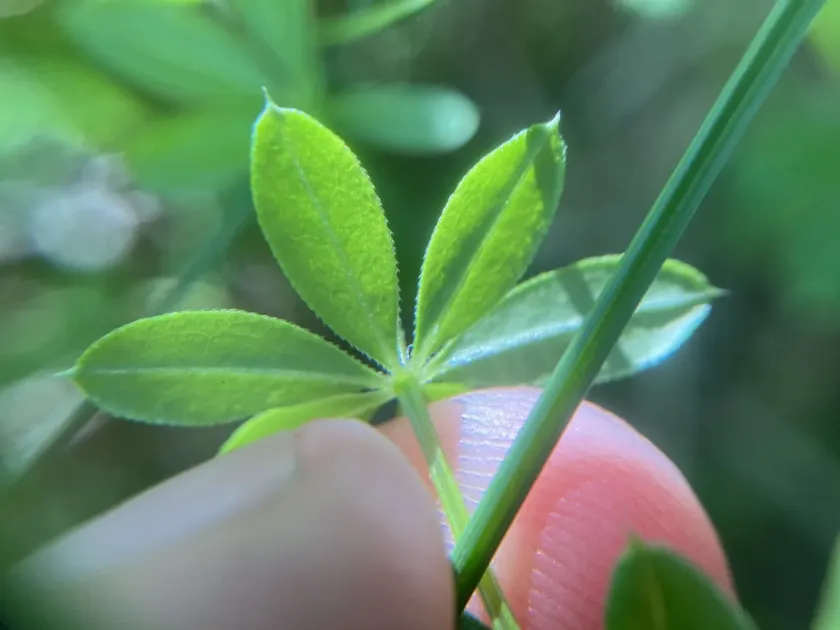
The plant is characterized by its slender, weak stems that possess small, recurved prickles, making the surface rough to the touch. The foliage is arranged in whorls, a classic structural feature of the Galium genus.
Cultivation of this species requires moist, nutrient-rich soils. It thrives best in environments where moisture levels are consistently high, making it unsuitable for well-drained, dry fields without supplementary irrigation systems.
Regarding climate, Rough bedstraw prefers temperate conditions with moderate temperatures. It does not tolerate prolonged heat or extreme drought, which can quickly lead to dehydration of the vegetative tissues.
While not a traditional agricultural crop, it is of scientific interest for its phytochemical properties and its role in riparian ecological restoration projects. Its ability to colonize damp areas makes it a candidate for specific landscape management.
Main diseases and pests
The most common disease affecting the plant is powdery mildew, which thrives in high-humidity environments with poor air circulation between the stems.
Typical pests include aphids, which colonize the growing tips, and spider mites, which can cause significant damage during periods of lower rainfall or high temperatures.
Management of these threats involves cultural practices such as maintaining proper plant spacing to ensure airflow, which significantly reduces the incidence of fungal pathogens.
Chemical control should be applied sparingly, focusing on the specific identification of the pest to avoid indiscriminate application of pesticides that might harm the surrounding flora.
Successful management of Rough bedstraw health requires periodic scouting for signs of leaf yellowing or stunted growth, allowing for timely intervention before infestations become severe.