
False cleavers
Galium spurium L.
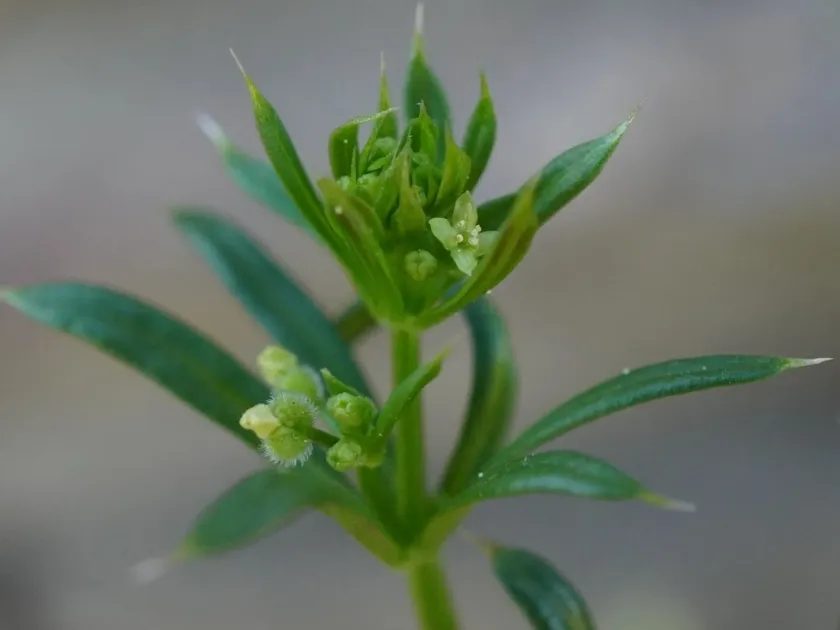
Description
Sowing dates
False cleavers (Galium spurium) is a prolific annual weed that germinates primarily in early spring. Its seeds can successfully sprout from a depth of up to 8 centimeters, making it a persistent threat in conventional tillage systems.
The optimal germination temperature ranges from 4 to 10 degrees Celsius. Early field preparation and mechanical cultivation are essential to eliminate the primary flush of weed seedlings before crop emergence.
Autumn-germinated seedlings are common in winter crop rotations. These plants overwinter as small rosettes and resume rapid vegetative growth as soon as temperatures rise in the spring.
Sowing schedules should prioritize rapid crop establishment. A dense crop canopy is the most effective natural method to suppress the light-loving seedlings of false cleavers.
Due to the long germination window, false cleavers can appear throughout the growing season. Integrating diverse crop varieties and competitive planting patterns helps minimize the impact of this weed.
Growing requirements
Belonging to the Rubiaceae family, this weed thrives in fertile, well-structured soils. It shows a preference for loam and chernozem soils with neutral to slightly alkaline pH levels.
High soil moisture is crucial for its development. False cleavers respond aggressively to spring rains, rapidly overgrowing crops that lack a strong canopy, thus competing for essential water resources.
The plant requires significant light intensity. In sparse stands or fields with low plant density, false cleavers can quickly dominate, reducing the overall productivity of the cultivated crops.
Proper nutrient management is key to field hygiene. Over-application of nitrogen can inadvertently favor the growth of false cleavers, increasing its competitive advantage over the desired crop.
Sustainable agricultural practices, such as precision weed management and appropriate crop rotation, are vital to preventing the buildup of false cleavers seeds in the soil bank.
Main diseases and pests
False cleavers serves as a host for various pathogens, including downy mildew and other fungal diseases. These can easily migrate from the weeds to adjacent crop plants, threatening yields.
Insect pests, particularly aphids and certain coleoptera, frequently utilize false cleavers for shelter and early-season food. This increases the overall pest pressure on agricultural fields.
Competition for macro-nutrients such as potassium and phosphorus is a significant issue. False cleavers extracts nutrients efficiently, causing visible stress to the main crop.
Harvesting challenges occur when the stems of the weed entwine with the crop. This mechanical interference increases equipment wear and necessitates extra cleaning steps for harvested seeds.
- Potential vector for viral and fungal plant infections.
- High competitive pressure for water and soil nutrients.
- Increased secondary costs during the grain cleaning process.