
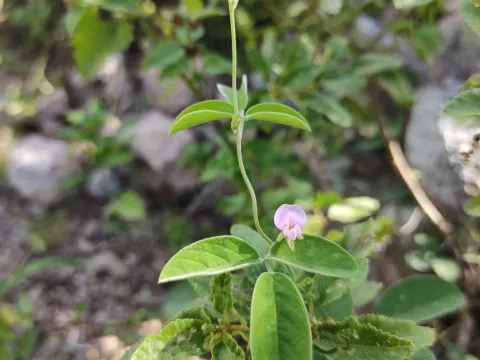
Galactia
Galactia P. Browne
Galactia (Galactia P. Browne) is a genus of perennial herbs and subshrubs belonging to the Fabaceae family. These plants are widely distributed throughout tropical and subtropical regions, particularly in the Americas, and are noted for their botanical versatility.
What the section contains

Galactia
Sowing should take place in the spring when soil temperatures reach at least 18–20 degrees Celsius. Consistent moisture is crucial during the germination phase to ensure the establishment of a robust root system capable of supporting future growth.
Seeds should be planted at a depth of 2–3 centimeters. In professional agricultural settings, scarifying the seeds is recommended to break the physical dormancy of the seed coat, leading to more uniform and rapid field emergence.
Once established, these plants exhibit strong vegetative expansion. This allows them to effectively cover the ground, making them highly suitable for sustainable, long-term pasture or soil-improvement systems without the need for frequent replanting.
Proper spacing is vital to prevent competition between young plants. When seeded in mixtures, it is important to monitor the density to ensure that Galactia plants have adequate access to light and nutrients during the early stages of development.
Galactia thrives in well-drained soils, ranging from sandy to loamy textures. It shows remarkable adaptation to dry environments, as its deep taproot allows it to survive periods of limited rainfall that would negatively impact other crops.
The plant requires full sun for optimal performance. While it can tolerate minor shading, its biomass production and flowering intensity decrease significantly in low-light conditions, limiting its growth potential in heavily shaded areas.
It prefers a neutral to slightly acidic soil environment. As a legume, it forms symbiotic relationships with nitrogen-fixing bacteria, which significantly improves soil fertility. Applying phosphorus-based fertilizers can further support this biological process.
Climate is a major limiting factor for cultivation. Galactia is sensitive to frost, which can kill the above-ground parts of the plant. Therefore, it is best suited for regions with long growing seasons and mild winters where the rootstock can survive.
Excellent soil drainage is non-negotiable, as waterlogged conditions quickly promote root rot. Farmers should avoid planting in low-lying areas prone to water stagnation to ensure the longevity of the stand.
Galactia is primarily cultivated as a high-protein forage crop for livestock. Its foliage provides a nutritious source of feed, making it a valuable addition to hay or grazing systems in warm climates.
The plant serves an important role as a ground cover. Its creeping or vining habit protects soil surfaces from erosion caused by wind and heavy rainfall, effectively stabilizing topsoil in fragile or sloped environments.
In various agricultural systems, it is used as a green manure or cover crop to enrich the soil with atmospheric nitrogen. This natural fertilizing effect helps improve the overall physical structure and nutrient content of the field.
Yield varies based on climatic conditions and harvest management. In intensive systems, the crop can withstand multiple cuttings per year, provided the moisture levels are sufficient to support rapid regrowth after each harvest.
It is important to manage the species carefully, as some types may become overly aggressive if introduced outside their natural range. Understanding the specific characteristics of the chosen variety is essential for responsible land use.
Fungal diseases, such as powdery mildew, are the primary threat to Galactia, particularly during seasons of high humidity. Maintaining proper field hygiene and avoiding high-density sowing can help mitigate these risks.
Insect pests, including various leaf-eating beetles, can cause significant damage to the canopy. Regular monitoring is necessary to prevent outbreaks that could compromise the nutritional quality of the forage.
Root-knot nematodes can pose a long-term problem if the crop is grown continuously on the same land. Implementing a strict crop rotation strategy is the most effective way to keep nematode populations at manageable levels.
Weed management is critical during the initial establishment phase. Providing the crop with a clean start allows it to develop a dense canopy, which eventually suppresses most invasive weeds on its own.
When chemical interventions are deemed necessary, choosing selective products is important to preserve the beneficial insects, especially pollinators that visit the flowers of the plant.