
Eucryphia intermedia
Eucryphia x intermedia J. Bausch
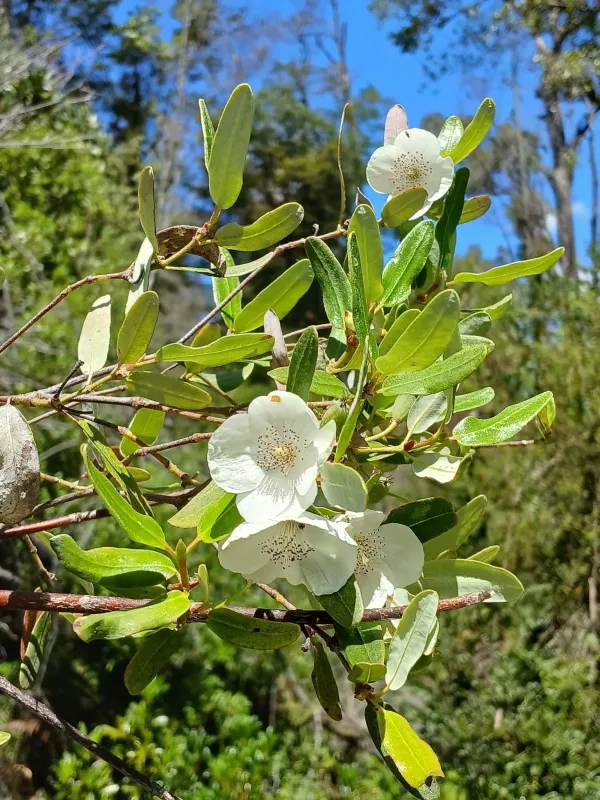
Description
Growing requirements
Eucryphia intermedia is a sophisticated hybrid shrub or small tree belonging to the Cunoniaceae family. It is a cross between Eucryphia lucida and Eucryphia glutinosa, combining the hardiness and floriferous nature of its parents into a singular, elegant form.
Originating from the breeding of species native to the temperate rainforests of Chile and Tasmania, this plant thrives in cool, moist environments. Its botanical features include distinct, pinnate leaves and spectacular white, cup-shaped flowers that appear in late summer.
To cultivate this species successfully, it is essential to provide deep, fertile, and slightly acidic soil. The soil must be well-drained, as the plant is highly susceptible to root damage caused by waterlogging during the dormant season.
The ideal location for Eucryphia intermedia is a position in partial shade, protected from intense midday sun and drying winds. In regions with very hot summers, consistent moisture at the roots is vital to maintain the plant's health and aesthetic appeal.
Standard care involves regular mulching to keep the root zone cool. Because the plant naturally grows in forest-like conditions, replicating these circumstances with organic top-dressing significantly enhances its growth rate and vigor.
Main diseases and pests
The primary threats to Eucryphia intermedia involve fungal pathogens, particularly in stagnant or excessively humid conditions. Leaf spot diseases and powdery mildew can occur if airflow around the canopy is insufficient.
Pests such as aphids and spider mites are common during the growing season. While these rarely kill the plant, they can weaken it and reduce its ornamental value, necessitating early intervention and monitoring.
Winter damage is a serious risk in colder zones. Frost can kill back younger stems, creating entry points for opportunistic pathogens. Proper winter protection with horticultural fleece is recommended in regions prone to heavy frost.
Nutrient deficiency, specifically iron chlorosis, can occur if the soil pH becomes alkaline. The plant requires acidic conditions to properly uptake essential minerals, which is why soil testing is a crucial part of maintenance.
To manage threats effectively, integrated pest management is advised. Avoid heavy chemical usage that may disrupt the local insect population, as this plant is a significant attraction for honeybees and other pollinators during its flowering phase.