
Leatherwood
Eucryphia lucida (Labill.) Baill.
Description
Growing requirements
Eucryphia lucida, commonly known as Leatherwood, is a species of evergreen tree or shrub within the family Cunoniaceae. This iconic plant is native to the temperate rainforests of Tasmania, where it thrives in high-moisture conditions.
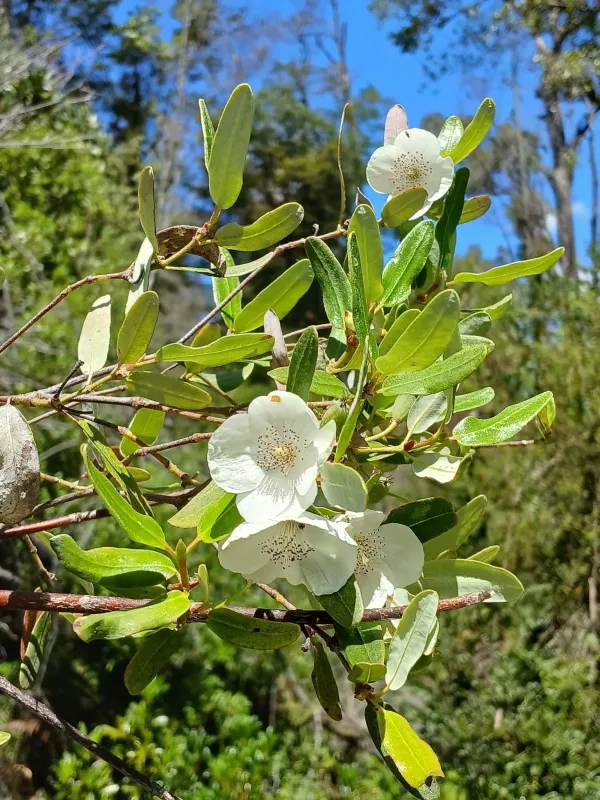
Botanically, it is recognized for its glossy, dark green leaves and prolific, nectar-rich white flowers. The plant exhibits a slow to moderate growth rate and can reach heights of up to 10 meters in its native habitat under optimal conditions.
Climate requirements focus on cool, humid environments. It is essential to protect the tree from excessive heat and direct drying winds. It prefers maritime climates where temperature fluctuations are minimal throughout the year.
Soil management is critical for the survival of this species. It demands a well-drained, acidic, humus-rich soil. Adding organic mulch is recommended to regulate soil temperature and prevent the root zone from drying out during warmer spells.
Economically, it is globally famous for the production of Leatherwood honey. This monocultural honey is highly prized for its unique, intense floral aroma, making it a cornerstone of the Tasmanian apiculture industry.
Main diseases and pests
Root rot, particularly caused by Phytophthora cinnamomi, is the primary threat to the species. Poor drainage significantly increases the risk of this devastating pathogen, which can lead to sudden plant decline.
Pests are generally manageable, but spider mites and scale insects may appear during periods of poor plant vitality or in restricted greenhouse environments. Regular monitoring of the foliage is advised for prompt intervention.
Frost sensitivity remains a concern for young specimens. While established trees can tolerate light frosts, temperatures dropping below freezing for extended periods can cause severe tissue damage to the tender new growth.
Chlorosis may occur if the soil pH becomes too high. Ensuring the soil remains acidic is vital for nutrient uptake, especially for iron, which is necessary for maintaining the deep green, glossy leaf characteristic of the plant.
Environmental stress, such as extreme heatwaves, can cause leaf scorch and shedding. Irrigation systems, such as misting or deep root watering, are necessary to mitigate these risks in non-native climates.