
Oval-leaf buckwheat
Eriogonum ovalifolium
Description
Growing requirements
Eriogonum ovalifolium, commonly known as oval-leaf buckwheat, belongs to the Polygonaceae family. It is a perennial subshrub native to the western regions of North America, where it thrives in alpine slopes, desert scrublands, and rocky substrates.
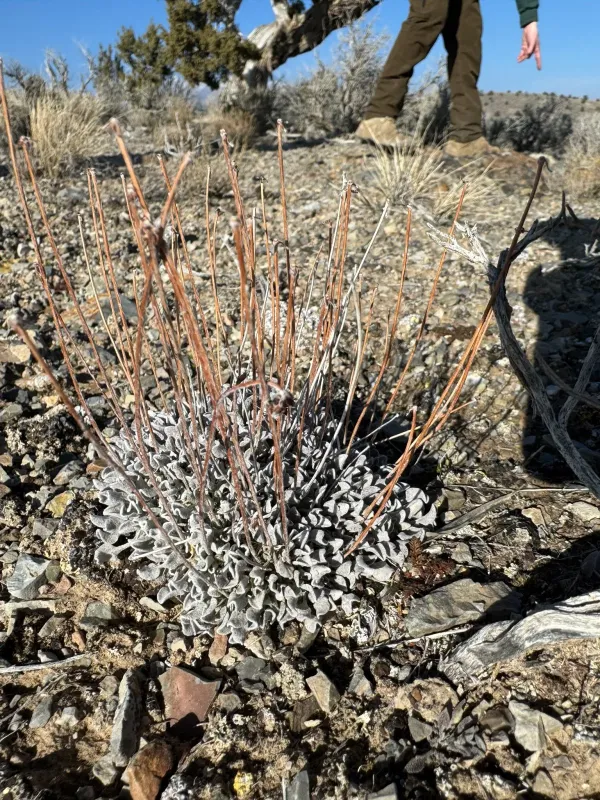
The plant is defined by its tight, cushion-like growth habit and small, oval-shaped leaves covered in dense, woolly trichomes. These hairs give the foliage a distinct silvery or white appearance, which serves as an adaptation to minimize water loss under intense sunlight.
Its flowering phase produces dense, globe-shaped clusters of flowers. Depending on the subspecies, these inflorescences can range from creamy white to vibrant yellow or deep pink, providing significant aesthetic value during the late spring and summer months.
Cultivation requires conditions that mimic its natural habitat. The soil must be exceptionally well-draining, typically consisting of rocky, sandy, or gravelly loam. The plant is extremely drought-tolerant once established and does not require fertilization; in fact, rich soils can negatively affect its longevity.
In landscape design, this species is highly valued for xeriscaping and rock gardening. It is an excellent choice for areas with poor soil quality, serving as a low-maintenance ground cover that supports native pollinators like bees and butterflies.
Main diseases and pests
The primary concern for Eriogonum ovalifolium is root rot, triggered by high soil moisture levels or poor drainage systems. Even minor waterlogging can lead to rapid decay of the taproot system.
Powdery mildew is a common fungal threat when plants are crowded or located in areas with stagnant air, especially during seasons with unusual humidity spikes.
Insect pests are typically limited to aphids that may infest flower stalks during the early spring bloom, potentially weakening the plant if infestations become severe.
Environmental stress, such as prolonged shade or excessive mulch around the base, can significantly reduce the plant's vigor and make it more susceptible to opportunistic pathogens.
Successful management involves keeping the root zone dry and ensuring the plant receives full sun exposure to maintain its characteristic compact form and health.