
Eriogonum grande
Eriogonum grande
Description
Growing requirements
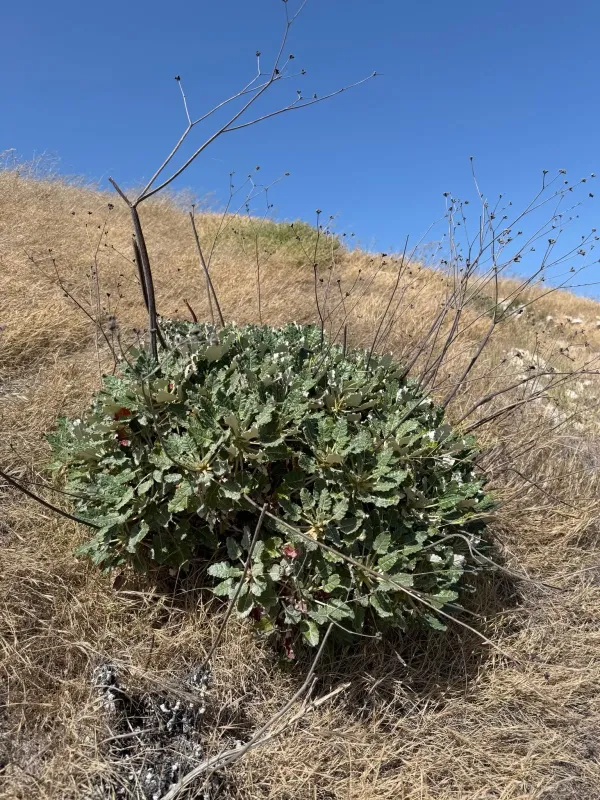
Eriogonum grande is a perennial shrub belonging to the Polygonaceae family. Originating from the Channel Islands and coastal regions of California, it is well-adapted to maritime environments and harsh soil conditions.
The plant features woody stems and dense rosettes of broad, leather-textured leaves. Its aesthetic appeal is defined by large umbels of cream or pink flowers that emerge during the summer season, providing excellent ornamental value.
In terms of soil requirements, this crop demands excellent drainage. It thrives best in sandy, gravelly, or rocky substrates where water does not accumulate. It is highly tolerant of nutrient-poor soils found in its native coastal habitats.
Climate adaptability is a strong point for Eriogonum grande, as it is naturally selected for Mediterranean-type climates. It requires full sun exposure to maintain its compact growth form and to promote abundant flowering.
The agricultural and horticultural use of this species is largely focused on drought-resistant landscaping, known as xeriscaping. It serves as a vital resource for local pollinators, including specialized native bees and butterflies.
Main diseases and pests
The primary threat to the health of Eriogonum grande is root decay caused by overwatering. Unlike many common garden crops, it cannot survive in waterlogged soil, which leads to rapid fungal infection of the root system.
Powdery mildew can occasionally affect the foliage, especially in environments where humidity levels are chronically elevated. Providing adequate spacing between plants is essential to ensure proper air circulation.
Insect pests such as aphids and spider mites can occasionally cause damage to the flower stalks. These pests are more prevalent in greenhouses or in protected areas where natural predators are absent.
Management of these threats is largely preventative. By selecting appropriate planting sites with excellent drainage and avoiding overhead irrigation, farmers can significantly reduce the risk of disease.
Regular monitoring for symptoms such as leaf yellowing or stunted growth is recommended. If damage is detected, targeted pesticide or fungicide applications should be performed to protect the plant population.