
Annual buckwheat
Eriogonum annuum
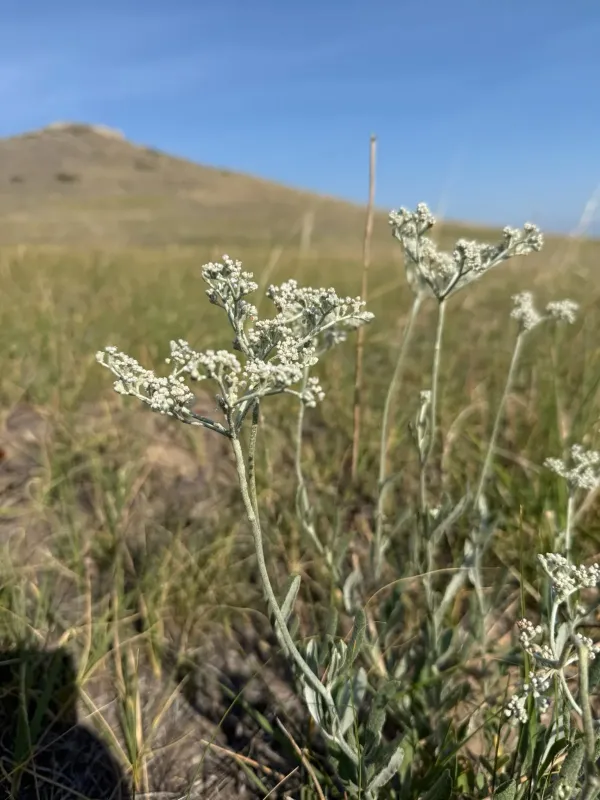
Description
Growing requirements
Annual buckwheat (Eriogonum annuum) is an herbaceous plant species belonging to the Polygonaceae family. Native to the central and southern regions of North America, this plant is well-adapted to arid landscapes, including prairies and sandy plains, showcasing remarkable survival mechanisms in dry environments.
The primary growth requirement for this species is full sun exposure. It thrives in open, unshaded areas where it can receive maximum solar radiation, which is essential for its flowering cycle and the maturation of seeds. Lack of sufficient light often leads to stunted growth and reduced vigor.
Regarding soil conditions, E. annuum prefers well-drained, sandy, or rocky substrates. It is exceptionally sensitive to waterlogging, as saturated soil conditions quickly compromise its root health and promote decay. Therefore, selecting a site with natural slope or high permeability is critical for successful cultivation.
Agricultural management is focused on low-maintenance strategies. Once established, the plant exhibits high drought tolerance, requiring minimal irrigation. The cultivation objective is often directed towards soil stabilization, where its root architecture helps bind loose soil particles and prevent wind erosion.
The plant serves as a vital resource for local biodiversity, acting as a late-season nectar source for various pollinators. This ecological contribution makes it a valuable component for sustainable land management and for supporting local insect populations on agricultural borders.
Main diseases and pests
The most significant threat to the health of E. annuum is the presence of fungal pathogens triggered by high moisture levels. Root rot and damping-off disease are common occurrences in poorly managed sites where drainage is inadequate or atmospheric humidity remains consistently high.
Powdery mildew represents another major issue in dense plantings. Proper spacing and airflow are essential cultural practices to mitigate the risk of fungal outbreaks, ensuring that the foliage dries quickly after any rainfall.
Insect pests such as aphids and spider mites frequently target the plant, particularly in stressed conditions. These organisms feed on the sap, which can significantly weaken the plant’s structural integrity and make it more susceptible to opportunistic secondary infections.
Integrated pest management (IPM) is highly recommended for this crop. Relying on natural predators or horticultural soaps is preferred over harsh synthetic pesticides to protect the beneficial pollinators that frequent the plants throughout the flowering period.
Vigilance during the peak growing season is necessary to identify early symptoms of infestation or decay. Prompt removal of affected plant material can successfully isolate the threat and preserve the remaining healthy population in the field.