
Rock sandwort
Eremogone saxatilis
Description
Growing requirements
Rock sandwort (Eremogone saxatilis) is a herbaceous perennial plant belonging to the Caryophyllaceae family. Originally native to rocky slopes and steppe areas, this species is highly adapted to challenging, nutrient-poor environments where other vegetation struggles to survive.
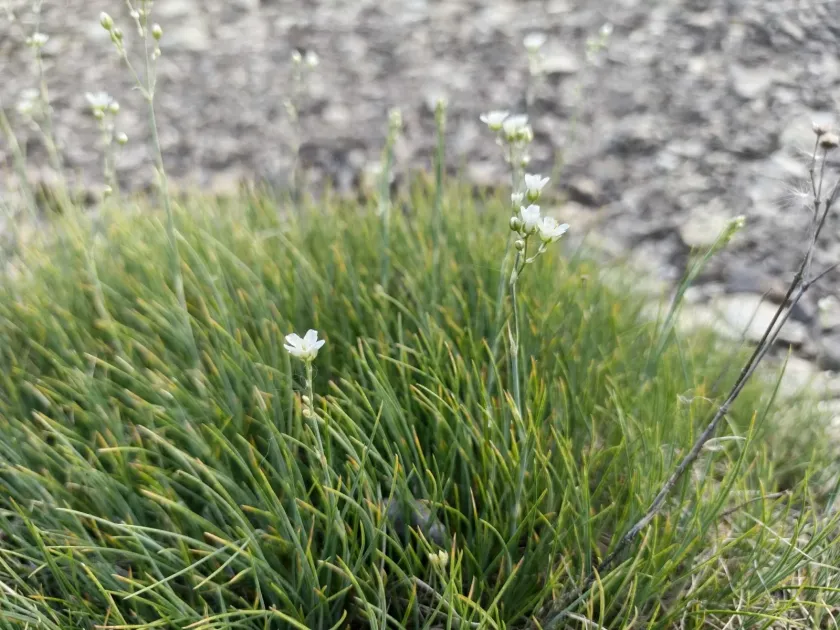
Botanically, it features tight, mat-forming cushions consisting of slender foliage and upright stems that produce small, delicate flowers. Its structure allows it to effectively prevent soil erosion while providing a stable and attractive ground cover in harsh conditions.
The cultural requirements are strictly defined by its natural habitat. It thrives in full sunlight and requires exceptionally well-draining, stony, or sandy soil. The plant is inherently sensitive to moisture accumulation, which can cause its root system to decay rapidly.
Regarding climate, rock sandwort is highly resilient, capable of enduring significant temperature fluctuations and prolonged drought. It does not require high levels of moisture or organic fertilization, as excessive nutrients often lead to leggy, unattractive growth patterns.
Economically, the plant is primarily utilized in horticultural and landscaping applications. It is widely valued by designers for creating low-maintenance alpine gardens, rockeries, and xeriscapes, where it adds texture and seasonal color with minimal human intervention.
Main diseases and pests
The most significant threat to rock sandwort is root rot caused by poor soil drainage or excessive irrigation. Once symptoms of crown rot appear, it is often difficult to save the affected mat, so prevention through proper substrate composition is essential.
Pests such as spider mites may target the plants during exceptionally hot and dry summers. Regular inspection of the foliage is necessary to ensure that mite populations do not reach levels that compromise the plant's overall health and aesthetic appeal.
Powdery mildew can become an issue if the planting site lacks proper air circulation. Densely packed plantings can trap humidity, creating a microclimate that facilitates fungal spore germination on the leaves and stems.
Effective management includes clearing out dried debris from the center of the cushions in early spring. This allows the plant to rejuvenate and ensures that new growth is not hindered by decaying organic matter from previous seasons.
Chemical control should be used sparingly and only as a last resort. Targeted fungicides or miticides are recommended if cultural practices fail to maintain the health of the plants, particularly in areas with humid maritime climates.