
Fendler's sandwort
Eremogone fendleri
Description
Growing requirements
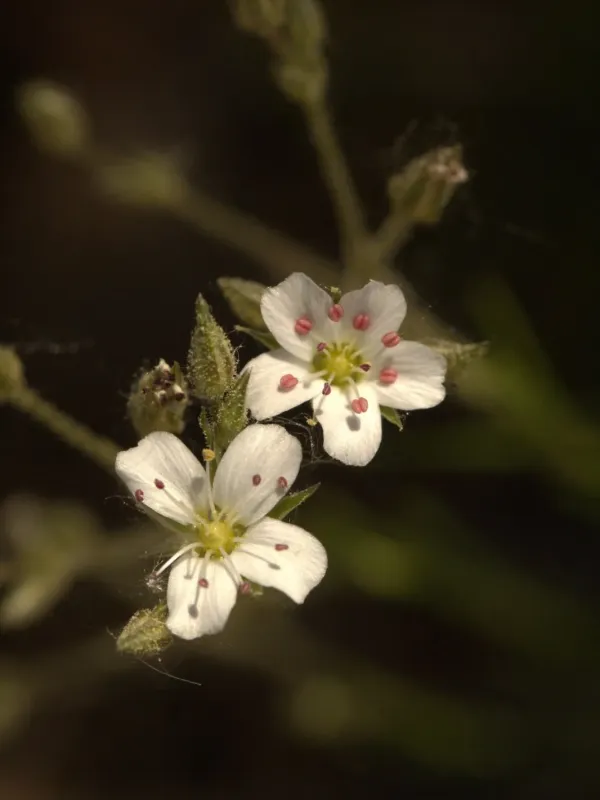
Fendler's sandwort (Eremogone fendleri) is a perennial herbaceous plant belonging to the Caryophyllaceae family. Native to the mountainous regions and arid landscapes of North America, it has evolved to thrive in nutrient-poor, stony substrates.
The plant grows in dense, tufted cushions or mats, making it an excellent choice for rock gardens. Its foliage consists of needle-like, rigid leaves that remain green throughout the growing season, while the flowers emerge on delicate, upright stems.
Regarding site requirements, this species demands excellent drainage and full sun exposure. It is highly intolerant of heavy, clay-based soils that retain moisture for extended periods, as these conditions are contrary to its natural mountain habitat.
The climate requirements for Eremogone fendleri involve adaptation to significant diurnal temperature fluctuations and cold winters. It is extremely drought-tolerant once established and does not require supplementary irrigation except during prolonged heatwaves.
In terms of agricultural or landscape use, this plant is primarily valued for its resilience and ability to stabilize gravelly slopes. It serves as a groundcover in xeriscaping projects, requiring minimal maintenance and no pruning under normal growing conditions.
Main diseases and pests
The most common threat is root rot, caused by excessive moisture and poor air circulation around the root collar. Ensuring a layer of topdressing with grit or coarse sand is essential to prevent moisture accumulation around the base.
While the plant is generally pest-resistant, it may occasionally be affected by aphids or spider mites during periods of high humidity. Regular inspection and avoiding over-fertilization are sufficient measures to keep the plants healthy and vigorous.