
Eperua falcata
Eperua falcata
Description
Growing requirements
Eperua falcata, commonly known as the wallaba tree, is a large evergreen canopy tree belonging to the family Fabaceae, subfamily Detarioideae. It is native to the tropical rainforests of the Guiana Shield and the Amazon basin in South America.
This species thrives in high-temperature, high-humidity environments typical of equatorial regions. It requires consistent annual rainfall and is strictly adapted to tropical climates, meaning it cannot tolerate frost or prolonged drought periods.
Soil requirements for Eperua falcata involve well-drained, nutrient-poor, or sandy substrates frequently found on hillsides or near riverbanks. The tree is adapted to acidic soil conditions prevalent in its native range, allowing it to compete effectively in these ecological niches.
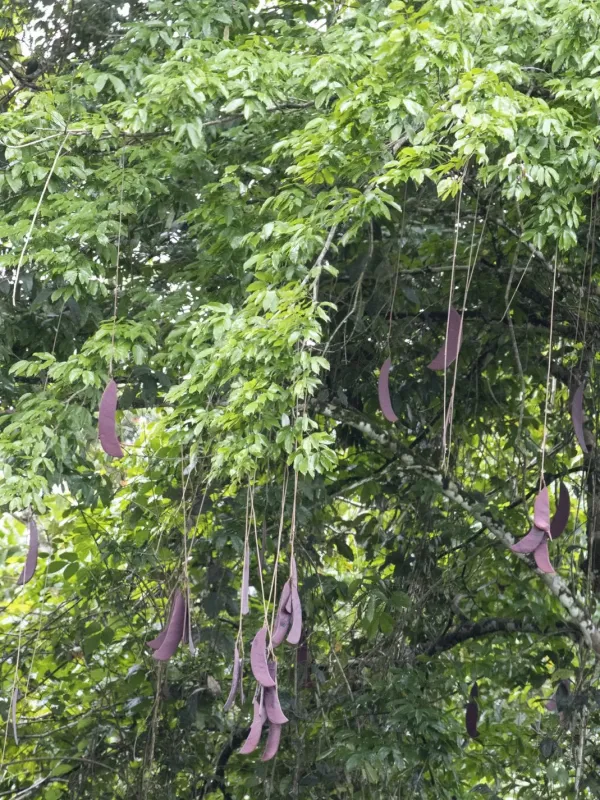
Botanically, the tree is distinguished by its leathery, pinnate leaves and its namesake falcate (sickle-shaped) seed pods. The flowers are typically clustered and attract various pollinators, which is a common trait among tropical legumes.
The timber of Eperua falcata is highly prized in regional construction due to its high density, significant oil content, and natural resistance to decay, termites, and other wood-boring insects. It is a preferred material for poles, railway sleepers, and structural shingles.
Main diseases and pests
Eperua falcata faces threats from typical forest pests, including various wood-boring beetles (xylophagous insects) that target weakened or injured trees in the dense tropical undergrowth.
Fungal infections can occur in the bark and sapwood if the trees are damaged by heavy storms or during extraction activities, leading to internal wood rot and long-term structural degradation.
Habitat loss resulting from deforestation and logging operations poses the greatest threat to the species, as it relies on undisturbed primary forests for successful regeneration and ecological stability.
Invasion by opportunistic plant species following forest clearing can stifle the growth of saplings, which require specific gaps in the canopy to receive sufficient light for development.
Climate change and subsequent shifts in local precipitation patterns could further stress populations, reducing their ability to resist outbreaks of pests that thrive in changing environmental conditions.