
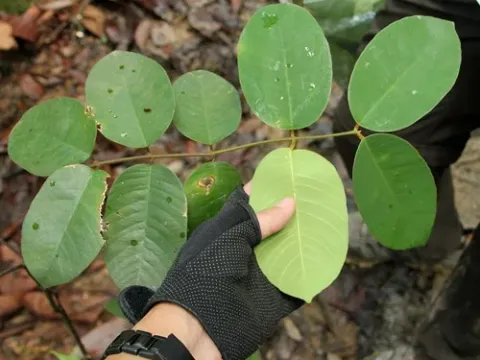
Enkleia
Enkleia
The Enkleia genus consists of tropical climbing plants that are not cultivated as agricultural crops. In their natural habitat, they propagate primarily through seeds, which require high substrate moisture to ensure successful germination.
What the section contains

Enkleia
For research or botanical collection purposes, seeds should be sown immediately after harvesting, as their viability decreases rapidly if they dry out. The ideal sowing period correlates with the arrival of the wet season, providing necessary moisture for root development.
The substrate must be porous and well-aerated, typically consisting of peat and coarse sand. Maintaining a soil temperature of 24–26 degrees Celsius is critical for the initial development of the seedlings.
Vegetative propagation via cuttings is technically demanding due to the physiological traits of the Thymelaeaceae family. The use of rooting hormones and high-humidity chambers is essential to encourage root formation in stem segments.
Seedlings are highly sensitive to intense sunlight and require shading during their early developmental stages. Constant monitoring of moisture levels is required to prevent the young plants from drying out.
Enkleia belongs to the Thymelaeaceae family and is categorized as a woody vine native to the tropical rainforests of Southeast Asia. These plants require a stable, warm, and humid environment to thrive.
High relative humidity is essential for the healthy physiological function of the leaves. In cultivation, Enkleia performs best in temperatures that do not drop below 20 degrees Celsius, mimicking its native forest environment.
The soil should be rich in organic matter and well-draining. Acidic to slightly acidic soil conditions are preferred, as these mirror the nutrient-cycling environment of tropical forest floors.
As climbers, these plants require vertical support to exhibit their natural growth patterns. Without a trellis or tree support, the plants may become stunted and fail to mature properly.
Light intensity should be moderate, as the plants are naturally adapted to the dappled light of the forest understory. Direct, harsh sunlight can cause significant damage to the foliage and inhibit vegetative growth.
Enkleia does not have agricultural value in terms of food or fiber production, and therefore, no yield data is recorded. Its use is largely confined to ethno-botanical contexts or specific local handicraft applications.
Scientific interest in this genus is focused on its biochemical properties and its place in the tropical ecosystem. Any biomass produced is typically for research purposes rather than commercial harvesting.
Growth rates in the wild are dependent on the availability of sunlight and the height the vine can achieve by climbing host trees. In a natural environment, the plant can spread significantly, forming dense canopy clusters.
There are no economic indicators for the cultivation of Enkleia because it is not a commodity. It remains a subject of study within botanical gardens and academic institutions focused on tropical biodiversity.
The management of Enkleia requires significant resources, including climate-controlled greenhouses and specialized support structures, making large-scale production unviable.
The primary threat to Enkleia is habitat loss due to deforestation in Southeast Asia. As tropical forests are cleared, the niches occupied by these vines are destroyed, leading to localized population declines.
In cultivated environments, fungal diseases are the most common threat, often resulting from poor ventilation and excessive moisture. These infections can manifest as leaf spots and stem rot, requiring diligent sanitary management.
Pests such as spider mites and scale insects represent a significant danger to the plants in controlled environments. These pests sap the plant's vitality and weaken its overall structure, making it susceptible to secondary infections.
Root-knot nematodes can also affect the plants, especially in greenhouses where soil hygiene is not strictly enforced. These pests cause damage to the root system, inhibiting the uptake of water and nutrients.
To maintain plant health, regular pruning of diseased or dead tissue is required. This practice improves air circulation and reduces the likelihood of widespread pathogen outbreaks within the plant collection.