
Ebbinge's Silverberry
Elaeagnus x ebbingei Boom
Description
Growing requirements
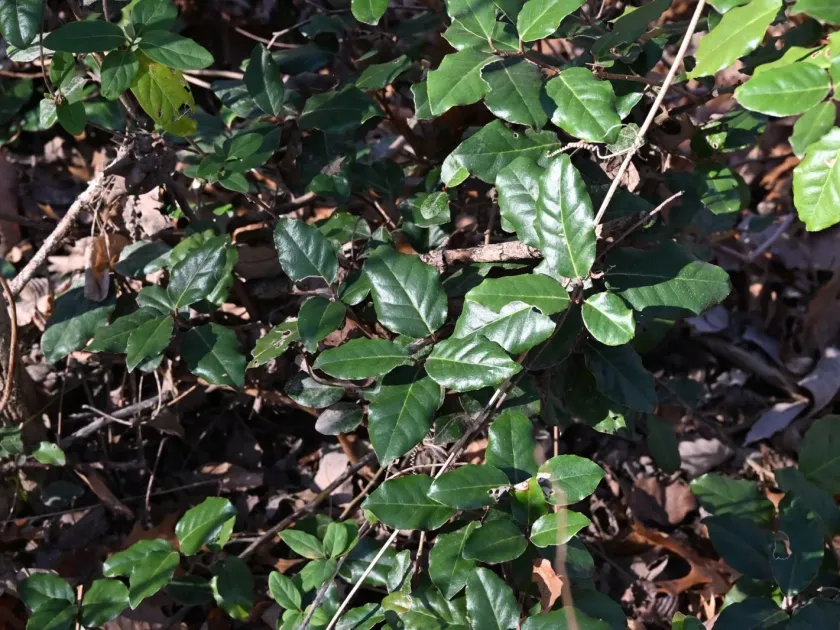
Ebbinge's Silverberry (Elaeagnus x ebbingei) is a robust, evergreen shrub belonging to the Elaeagnaceae family. It is a cross-breed, prized for its vigorous growth habit and thick, leathery, dark green foliage with a silver underside.
Originating from human-selected cultivars, this plant is widely appreciated in temperate climates for its remarkable durability. It excels in coastal environments, where it serves as a windbreak due to its resistance to salt spray and saline soils.
For successful cultivation, the plant requires well-drained soil and a location with full sun to partial shade. It is highly versatile and can thrive in poor, sandy, or clay soils, making it an excellent choice for difficult landscape spots.
Climate adaptability is a key feature, though it is best suited for USDA hardiness zones 7 to 9. While the plant is drought-tolerant once established, younger specimens require regular watering during their first growing seasons to develop a healthy root system.
Maintenance involves routine pruning to maintain the desired size and shape. Since it responds well to shearing, it is frequently used as a formal hedge or screen. Fertilization with a balanced slow-release formula in spring encourages dense foliage growth.
Main diseases and pests
This species is generally considered resistant to most garden diseases. However, in poorly ventilated or excessively humid conditions, root rot or leaf spot diseases may occasionally occur, requiring better air circulation and moisture control.
Pests are rarely a major issue, but infestations of aphids or scale insects may occur on new growth. Regular inspection of the foliage is recommended to catch such problems before they escalate and affect the plant's overall aesthetic value.
Management of pest populations is best handled with horticultural oils or mild systemic insecticides when necessary. Prevention is always more effective, focusing on keeping the shrub pruned to allow sunlight to reach the inner branches.
Winter injury can occur in colder regions if temperatures drop significantly below freezing for extended periods. Providing a wind-protected location or winter mulch can help mitigate potential cold damage to the root zone.
In landscape architecture, the plant is valued not only for its foliage but also for its inconspicuous but highly fragrant, small bell-shaped flowers that bloom in autumn, followed by small edible, though often astringent, berries.