
Autumn olive
Elaeagnus umbellata Thunb.
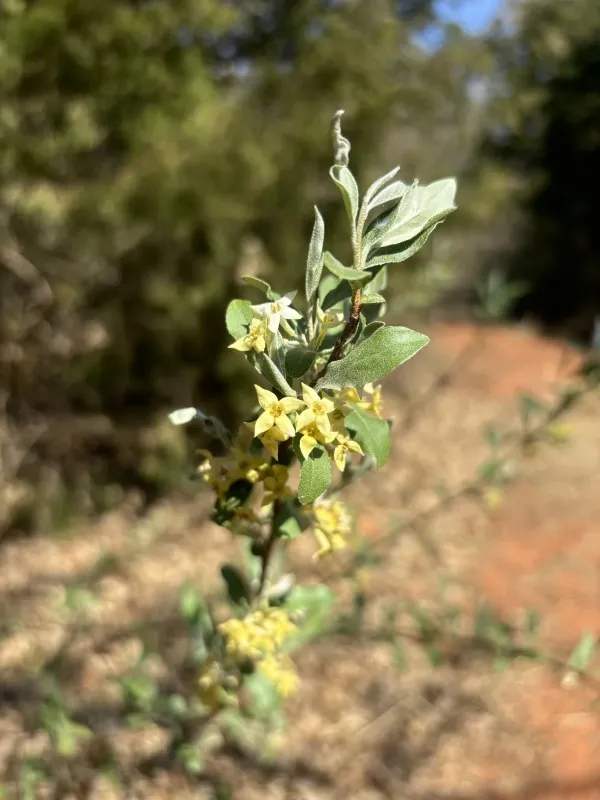
Description
Sowing dates
Seeds of the autumn olive are primarily sown in late autumn as they require a cold stratification period of 3-4 months to break dormancy. If spring sowing is planned, seeds must undergo artificial stratification in damp sand.
For vegetative propagation, young plants should be transplanted in early spring before sap flow begins or in autumn well before the ground freezes. Preparing planting holes in advance is essential due to the plant's robust root system.
The optimal planting density for commercial orchards is a 3x4 meter grid, which provides sufficient space for each shrub to develop fully. As the plant is vigorous and forms dense thickets, proper spacing is crucial for management.
Using one- or two-year-old containerized seedlings is recommended to accelerate fruit production and ensure a higher survival rate compared to bare-root stock.
Since the autumn olive is entomophilous, cross-pollination between different cultivars is necessary for optimal fruit set. Planting multiple varieties will significantly improve crop yields and fruit consistency.
Growing requirements
The autumn olive belongs to the Elaeagnaceae family and is recognized as a significant nitrogen-fixing crop. Its roots form a symbiotic relationship with actinobacteria, allowing the plant to enrich soil fertility naturally.
It is an extremely undemanding species, thriving in poor, sandy, or even slightly saline soils where other crops might struggle. Well-drained soil is preferred as the shrub is sensitive to prolonged waterlogging in the root zone.
Full sun is a critical requirement for high productivity; partial shade leads to sparse foliage, lower fruit yields, and loss of the shrub's natural compact structure. Sunny slopes with wind protection are ideal for plantations.
This species is highly hardy and drought-tolerant, making it suitable for a wide range of climatic conditions. It is frequently employed as a windbreak, hedge, or soil-stabilizing plant in sustainable agriculture.
Initial establishment requires regular watering and weed control during the first two years. Once mature, the autumn olive is remarkably self-sufficient and requires minimal, if any, mineral fertilization.
Yield
Fruit production typically begins in the 3rd to 4th year after planting. Yields increase progressively as the shrub matures, and with proper management, they reach impressive levels for a wild-type berry crop.
A single mature shrub can produce between 10 and 20 kilograms of fruit per season. Since berries ripen unevenly, harvesting should be performed in several passes between August and October.
The berries are a rich source of lycopene, vitamins C and E, and various organic acids. These nutritional properties make them an attractive prospect for the food processing industry for juices, jams, and powders.
Beyond human consumption, the plant serves as a vital forage source for wildlife and birds, making it a valuable addition to agroforestry systems and biodiversity-focused farms.
For maintaining consistent yields, rejuvenation pruning every 5-7 years is advised. Removing older, less productive stems stimulates vigorous new growth that will yield higher-quality fruit in subsequent seasons.
Main diseases and pests
The autumn olive is naturally robust, but like any fruit crop, it can be susceptible to specific issues under poor conditions. High humidity and lack of airflow can occasionally lead to powdery mildew outbreaks.
Good cultural practices, such as strategic pruning to ensure proper air circulation throughout the canopy, are the best methods for preventing fungal infections.
Pests like aphids or scale insects may occasionally infest young shoots. If intervention is necessary, the use of organic or biological control measures is recommended to preserve the shrub's ecological value.
Root health is paramount; therefore, avoiding soil compaction around the root zone is crucial for preventing root rot. Ensuring good drainage and aeration remains the best defense against soil-borne pathogens.
In certain ecosystems, the plant is considered invasive due to its rapid spread. It is essential to monitor the plantation and manage potential suckering to prevent the shrub from escaping intended areas.
Harvesting
Harvesting autumn olive can be challenging due to the thorns present on many branches. The use of protective gloves and careful snips for harvest is recommended to prevent injury and damage to the plant bark.
Fruits should be harvested only when fully ripe, indicated by a deep red color with silver speckles. Under-ripe fruit is highly astringent due to high tannin content and lacks the desired flavor profile.
Berries are delicate and do not have a long shelf life. They should be processed or sold within 24 to 48 hours of picking. Using shallow crates for transport helps prevent the fruit from crushing under its own weight.
While mechanical harvesting via fruit-shaking equipment is possible, it requires specific orchard design and pruning styles. For most small-scale farmers, hand-harvesting remains the standard approach.
Post-harvest, fruits must be cleaned and sorted thoroughly. Beyond fresh consumption, they are excellent candidates for drying or flash-freezing to extend their availability throughout the year.