
Echinopsis marsoneri
Echinopsis marsoneri
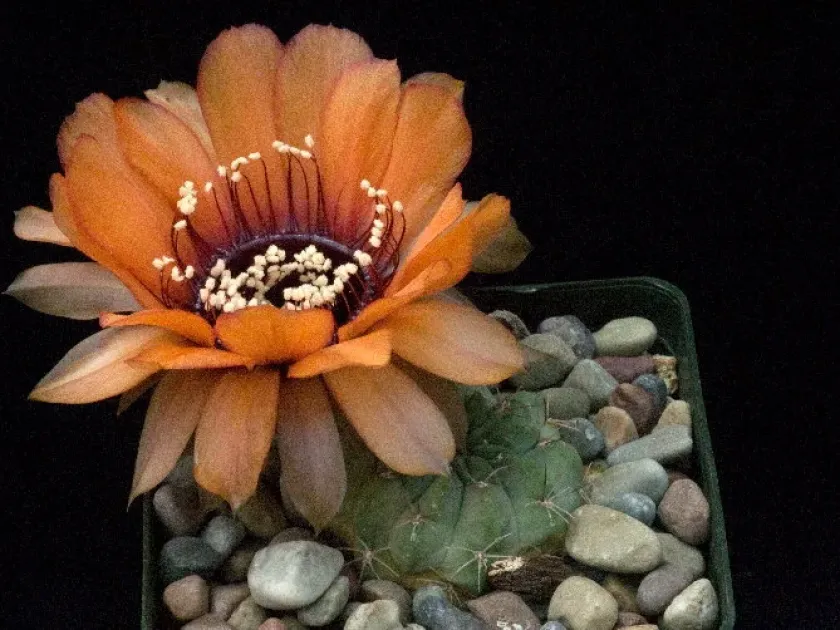
Description
Growing requirements
Echinopsis marsoneri is a remarkable succulent species within the Cactaceae family. Native to the rugged and arid mountainous regions of Argentina, this plant has evolved to thrive in environments characterized by poor soil quality and significant temperature fluctuations.
The morphology of this plant features a compact, globose stem with well-defined ribs. These ribs support the plant's structure and feature specialized areoles equipped with spines, which provide defense and shading for the succulent tissues beneath.
Cultivation requires high levels of light exposure. For optimal development, the plant should receive full sun, although supplemental shading might be required in extremely hot summer climates to prevent epidermis scorching.
The soil medium must be highly porous and inorganic. A professional succulent mix should consist of coarse sand, perlite, and small gravel, ensuring that water passes through quickly to prevent saturation near the root zone.
During the growing season, a temperature range of 20°C to 28°C is ideal. However, the plant strictly requires a cool dormant period during winter, with temperatures dropping to 5–10°C, as this thermal cycle is necessary for flower development.
Main diseases and pests
The most severe threat to Echinopsis marsoneri is root rot, which typically stems from poor drainage or excessive irrigation. This pathogen often progresses quickly, leading to total tissue collapse if not addressed early.
Spider mites are common pests that thrive in dry, stagnant air. They damage the cactus surface by piercing the epidermal cells, which results in visible, unsightly lesions and reduced photosynthetic efficiency of the plant.
Mealybugs are frequently observed nestled within the ribs and areoles. These pests feed on the sap and produce honeydew, which can attract secondary fungal growth, further damaging the aesthetic and physiological state of the cactus.
Root-dwelling insects, such as root mealybugs, can silently devastate the plant by feeding on its root system. If the cactus loses its ability to absorb water and begins to shrink during the growth period, inspection of the root ball is necessary.
Maintaining plant health involves a strict preventative protocol: inspecting the stem regularly, ensuring proper airflow around the pots, and utilizing appropriate acaricides or systemic insecticides if pest infestation is detected early.