
Echinopogon ovatus
Echinopogon ovatus
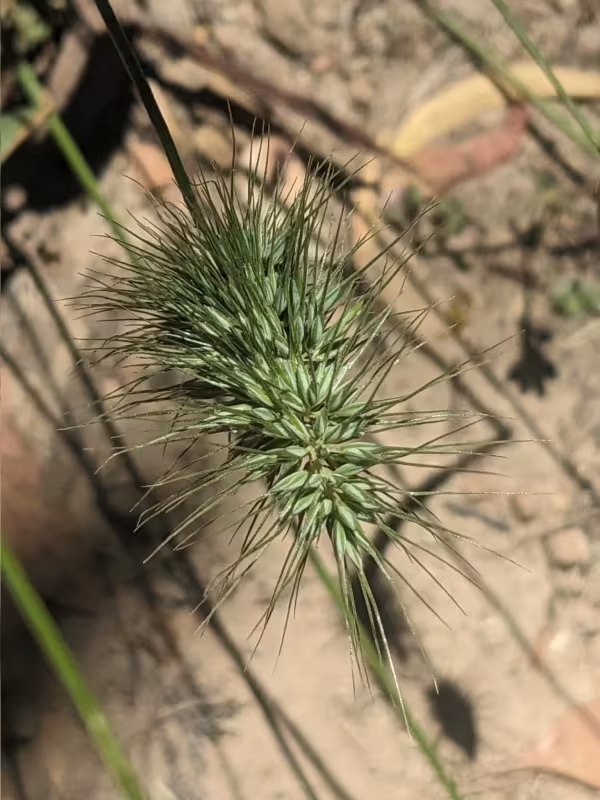
Description
Sowing dates
Echinopogon ovatus, commonly known as forest hedgehog grass, is a perennial member of the Poaceae family. Its natural life cycle begins with germination in early spring when soil temperatures reach the required threshold for consistent growth.
For agricultural cultivation, early spring sowing is the preferred method. This timing allows the seeds to capitalize on soil moisture accumulated during the winter season, resulting in a more uniform establishment of the crop.
Due to the small size of the seeds, they should be sown at a shallow depth of approximately 1–2 centimeters. Proper seed-to-soil contact, achieved through light rolling, is essential to maximize germination rates in varied field conditions.
Establishment is relatively slow, making the first month after emergence a vulnerable period. It is critical to manage weed competition during this phase to ensure the young grass can secure its position within the pasture or meadow.
Seedbed preparation is vital for success. The field must be finely tilled and leveled to prevent deep burial of seeds, which would significantly reduce the energy of emergence and overall field population density.
Growing requirements
This grass thrives in moist, well-drained soils, showing a preference for a neutral to slightly acidic pH level. While it is adaptable to various soil types, its highest productivity is observed in fertile loams rich in organic matter.
Climatic adaptability is one of its strengths, provided there is adequate rainfall during the active growth phases. It is well-suited to temperate climates and can withstand moderate fluctuations in ambient temperature.
The species demonstrates good tolerance to temporary waterlogging, making it a viable candidate for low-lying areas or flood-prone meadows where other forage species might fail to persist.
Echinopogon ovatus shows moderate tolerance to shade, which allows it to be used in silvopastoral systems. It performs reliably even when partially shaded by trees or taller perennial crops in a mixed-sward environment.
Maintaining long-term productivity requires a balanced approach to soil fertility. Applying nitrogen-based fertilizers after grazing or cutting cycles encourages rapid tillering and keeps the forage production stable over multiple years.
Main diseases and pests
Fungal diseases, such as leaf rusts, are the primary biological threat to the crop, especially in humid conditions with poor air circulation. These infections can drastically reduce both biomass production and nutritional value.
Insect pests, including cereal flies and aphids, can cause significant damage during the early growth stages by feeding on tender tillers. Vigilance and early detection are key to preventing widespread infestations.
Smut diseases may affect the inflorescences, leading to sterile or degraded seeds. Using high-quality, treated seed is the most effective preventative strategy against such pathogens in professional farming settings.
Weed competition remains a major issue, particularly with invasive species that grow faster than the hedgehog grass in its initial stages. Integrated weed management is recommended for the first year of establishment.
Small mammals and rodents can cause damage by gnawing on the root systems and crowns during the winter months, especially when protective snow cover is absent for extended periods of time.
Harvesting
Echinopogon ovatus is utilized primarily for grazing and hay production. Rotational grazing is essential to prevent overgrazing, which can degrade the root system and reduce the longevity of the perennial sward.
For hay production, the optimal harvest time is just before the plants reach full heading. This stage ensures a superior balance of protein, energy, and fiber, making it a highly palatable feed for livestock.
Seed harvesting requires careful timing as the seeds are prone to shedding once fully mature. Direct combining is typically employed when the inflorescences transition from green to a straw-yellow color to minimize losses.
Post-harvest processing involves immediate drying to prevent heating and degradation of the seeds. Maintaining low moisture levels is crucial for preserving the viability and vigor of the seed lot for future sowing.
Properly stored hay from this grass is well-received by livestock. Keeping the storage area dry and well-ventilated is necessary to prevent the formation of mold and to ensure long-term nutritional stability.