
Echinopogon cheelii
Echinopogon cheelii
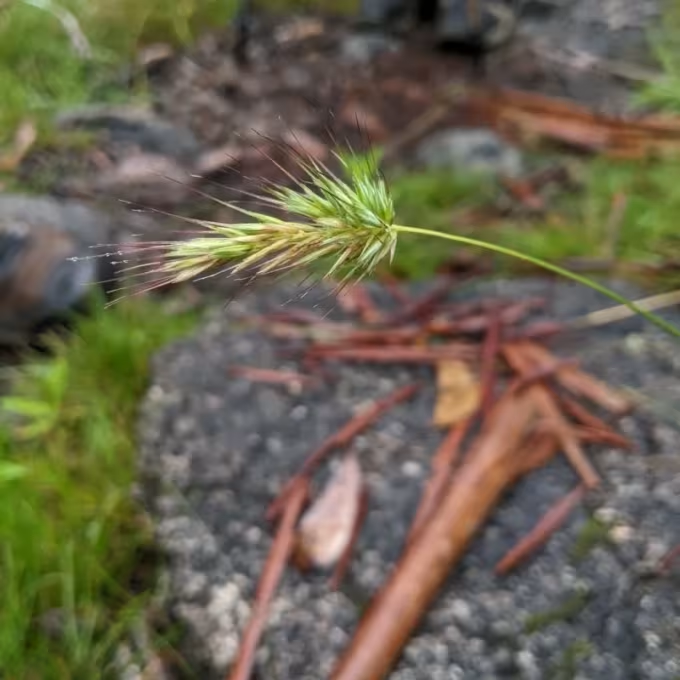
Description
Growing requirements
Echinopogon cheelii is a perennial grass species belonging to the Poaceae family. It is native to the eastern regions of Australia, where it has successfully adapted to a wide array of environmental conditions, ranging from open woodlands to clearings.
This grass thrives in well-drained soils, showing a preference for sandy or silty loam textures. It is notably drought-tolerant, making it an excellent candidate for agricultural systems in regions characterized by irregular precipitation and water scarcity.
Regarding light requirements, Echinopogon cheelii performs best in full sun or light shade. Its high plasticity allows it to survive in various microclimates, establishing deep roots that protect it against thermal stress and physical disturbance.
The agronomic management of this species involves maintaining the integrity of its dense tussocks. Because of its root structure, it is highly effective at stabilizing soil and preventing erosion on slopes or near waterways.
Nutritionally, the plant does not require high levels of fertilization to remain productive. It is capable of extracting necessary minerals from soils that might be considered nutrient-poor, reducing the need for expensive chemical fertilizers in pasture management.
Yield
The primary agricultural use for Echinopogon cheelii is as a forage resource for livestock. It is valued for its ability to provide green biomass during parts of the growing season when other more delicate forage crops might struggle.
Yield stability is dependent on grazing intensity. When managed with rotational grazing practices, the plant shows strong regrowth potential, ensuring that pasture productivity remains consistent across the seasons for sheep and cattle.
The nutritional profile of the plant is highest during the vegetative phase. As the plant enters the reproductive stage, the stems become coarser; therefore, farmers often aim to manage grazing to keep the plant in a leafy state for better digestibility.
Seed production is another aspect of the species' utility. The seeds germinate well under appropriate conditions, allowing for natural reseeding within established pastures to ensure the longevity and density of the grass sward.
Beyond traditional grazing, its role in ecological restoration is significant. It is often utilized in land rehabilitation projects because of its robustness and ability to reclaim degraded soils, providing immediate ground cover in arid zones.
Main diseases and pests
Echinopogon cheelii is recognized for its high level of resistance to common agricultural pathogens. It has evolved natural defenses that protect it from many of the fungal and bacterial diseases that frequently afflict domesticated cereal crops.
Pest pressure on this species is generally low. The combination of its silica-rich tissues and robust growth habit makes it less appealing to many common insect pests, resulting in reduced reliance on systemic pesticides.
The primary threat to the long-term success of Echinopogon cheelii in an agricultural setting is competition from invasive weeds. If not monitored, vigorous weed species can outcompete the grass, leading to a decline in overall forage quality.
To maintain a healthy stand, farmers are encouraged to avoid overgrazing, which can leave the soil exposed and facilitate weed encroachment. Controlled grazing ensures that the plant retains its vigor and competitive advantage over unwanted flora.
In humid seasons, localized fungal outbreaks may occur if air circulation is poor. Proper land management, including the removal of dead organic matter (thatch), helps improve airflow and lowers the risk of pathogens settling in the root zone.