
Echinopogon caespitosus
Echinopogon caespitosus
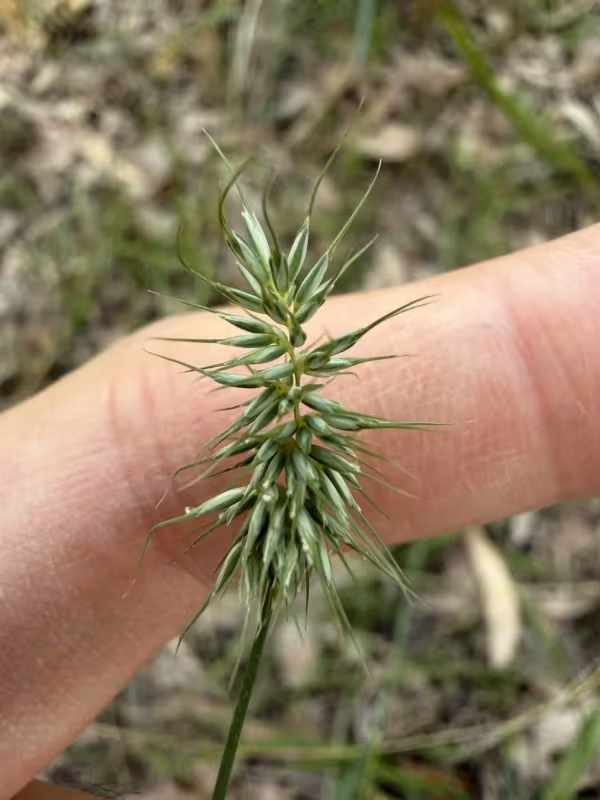
Description
Sowing dates
Echinopogon caespitosus is a species of perennial grass belonging to the Poaceae family. Under natural conditions, it reproduces primarily through seeds and vegetative expansion of the dense tussocks.
For establishing sown pastures, the optimal sowing time occurs in early spring or late summer, when the soil retains sufficient moisture for germination.
The seeding rate must be calculated based on the purity of the material to ensure an optimal stem density per square meter.
Quality seedbed preparation is essential during sowing, as the species is sensitive to seed burial depth in the early stages of establishment.
Young seedlings develop relatively slowly, making it critical to control competition from fast-growing weeds during the establishment phase.
Growing requirements
Native to Australia, this plant exhibits high adaptability to various soil types, including nutrient-poor and loamy substrates.
Echinopogon caespitosus prefers moderately moist areas but possesses a notable tolerance to short-term drought conditions.
The grass demonstrates good cold tolerance within its natural range, making it suitable for regions with variable seasonal climates.
Optimal development requires well-lit areas, as excessive shading restricts tillering processes and significantly lowers total biomass production.
The soil pH should ideally be near neutral, although the plant can tolerate slight deviations toward acidity or alkalinity.
Yield
The agricultural value of the crop lies primarily in providing high-quality green forage for livestock, particularly during the grazing season.
The plant forms dense tufts that withstand trampling well, making it a promising component for inclusion in permanent pasture mixtures.
Biomass yield is directly correlated with mineral nutrition levels, with nitrogen application proving effective during the active growth period.
Under intensive grazing management, the plant is capable of multiple regrowth cycles within a single growing season.
The nutritional value of Echinopogon caespitosus is highest before the heading stage, ensuring excellent palatability for grazing animals.
Main diseases and pests
Major threats to the crop include fungal pathogens, such as powdery mildew and various types of grass rusts.
Waterlogged conditions can lead to root rot infections, which significantly compromise the long-term viability of the plant tussocks.
Among pests, cereal flies and aphids pose the greatest threat, as they feed on the sap of young leaves and shoots.
Poor grazing management and overstocking contribute to pasture degradation and the invasion of opportunistic weed species.
Disease prevention strategies include maintaining proper crop rotation and implementing rotational grazing to minimize the pathogen load.
Harvesting
Harvesting for hay should be performed at the heading stage, before flowering, to maximize nutrient retention within the foliage.
For grazing systems, it is essential to maintain an adequate stubble height to prevent overgrazing, which can weaken the root system.
Mowing should be conducted at a height of at least 5-7 centimeters to facilitate rapid regrowth from the basal tillering nodes.
Seed harvesting should be carried out during full maturity of the panicles, taking care to minimize losses due to natural shattering.
Post-harvest processing of seed material involves thorough cleaning and drying to standard moisture levels to ensure long-term viability.