
Dyschoriste thunbergiiflora
Dyschoriste thunbergiiflora
Description
Growing requirements
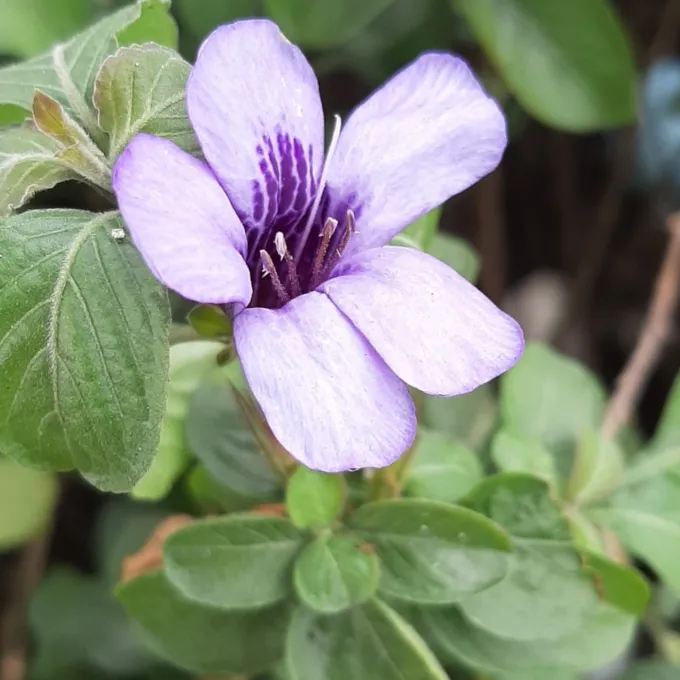
Dyschoriste thunbergiiflora is a perennial semi-shrub belonging to the Acanthaceae family. This species is native to East Africa and is valued for its ornamental characteristics, particularly its beautiful, tube-shaped blue-violet flowers.
The plant thrives in warm, tropical conditions and requires consistent temperatures between 18°C and 25°C. It is frost-sensitive, making it suitable for greenhouses, conservatories, or temperate climates as a seasonal potted plant.
Regarding soil requirements, it prefers a well-drained, nutrient-rich substrate with a neutral to slightly acidic pH. Incorporating organic matter into the soil helps to retain necessary moisture while preventing waterlogging, which the roots cannot tolerate.
Light exposure is a critical factor for healthy growth. Dyschoriste thunbergiiflora performs best in bright, indirect light. Direct sunlight, especially during the summer, can cause leaf scorch and should be avoided or filtered.
Regular pruning is an essential part of its agronomy. Since the plant tends to become leggy, pinching back the stems encourages denser foliage and promotes more prolific flowering throughout the growing season.
Main diseases and pests
Pest management is crucial, as the plant is susceptible to spider mites and whiteflies, especially in environments with low humidity. Regular misting can help deter spider mites and maintain the health of the leaves.
Root rot is the most significant disease threat to this culture. It is primarily caused by poor drainage or overwatering. Using an appropriate potting mix and ensuring pots have adequate drainage holes are the best preventative measures.
Powdery mildew may occur if ventilation is inadequate, especially in humid and stagnant greenhouse conditions. Increasing air circulation around the plants is essential for reducing the spread of fungal spores.
Monitoring the undersides of leaves is recommended for early detection of infestations. If pests appear, mild insecticidal soaps or horticultural oils can be used to treat the plant safely without damaging its foliage.
Overall, maintaining a stable, stress-free environment significantly boosts the plant’s natural defenses. Proper nutrition, consistent hydration, and good greenhouse hygiene are key to keeping Dyschoriste thunbergiiflora vigorous and disease-free.