
Dyschoriste oblongifolia
Dyschoriste oblongifolia
Description
Sowing dates
Sowing Dyschoriste oblongifolia seeds is best performed in the fall, allowing for natural stratification throughout the winter months to maximize germination rates in the spring.
When using nursery trays, a loose and well-aerated sandy soil mix is recommended to prevent the damping-off of seedlings, which are sensitive to high humidity.
Seedlings should be hardened off before being transplanted into their permanent location, ensuring they are protected from direct wind and extreme temperature fluctuations.
Spacing is a critical factor; because the plant grows through spreading rhizomes, providing sufficient room for expansion is essential to prevent overcrowding.
Propagation through root division is a highly effective method to maintain consistent traits and accelerate the establishment of new plantings in the garden.
Growing requirements
Dyschoriste oblongifolia, a member of the Acanthaceae family, is a perennial herbaceous plant native to the sandy pine barrens and open woodlands of the Southeastern United States.
The plant thrives in well-drained, acidic to neutral soils; it is exceptionally well-adapted to environments where nutrient levels are relatively low but drainage is excellent.
Sunlight requirements are high, with full sun exposure being necessary for the plant to achieve its characteristic compact growth and prolific lavender-colored blooms.
It possesses significant drought tolerance once established, due to its deep root structure which helps it access subsurface moisture during dry periods.
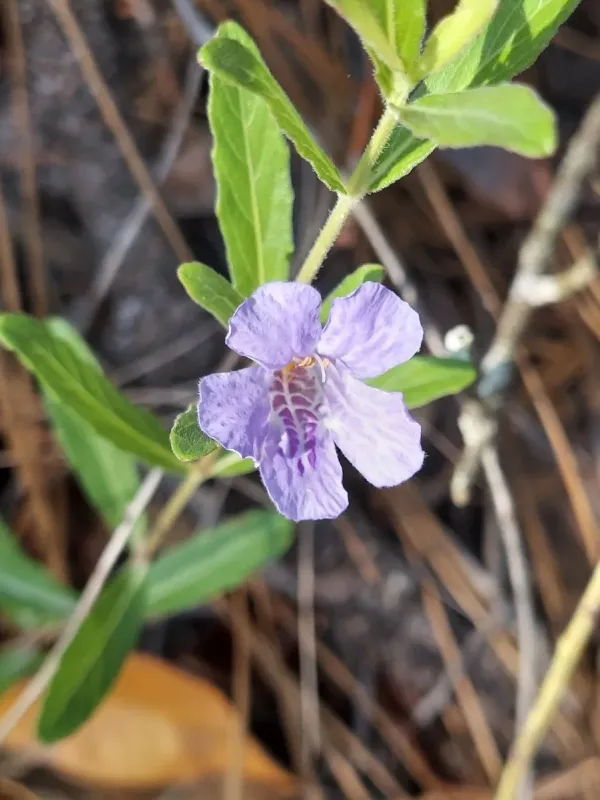
Morphologically, the plant is identified by its opposite, oblong leaves and tubular flowers, which are highly effective at attracting native pollinator species.
Main diseases and pests
Root rot caused by Phytophthora or Pythium species is the most significant pathological threat to this culture, primarily occurring in poorly drained soils.
Foliar infections such as leaf spots can occur under conditions of constant moisture, necessitating regular inspection of the lower canopy of the plant.
Insect pests including aphids and spider mites may occasionally infest the plants, particularly during stressful periods of heat and limited precipitation.
Weed management remains the most labor-intensive part of the cultivation process, as invasive species can easily outcompete young Dyschoriste plants.
Maintaining a clean, weed-free zone around the base of the plant is essential to prevent the spread of soil-borne pathogens and ensure healthy air circulation.