
Dissotis thollonii
Dissotis thollonii
Description
Growing requirements
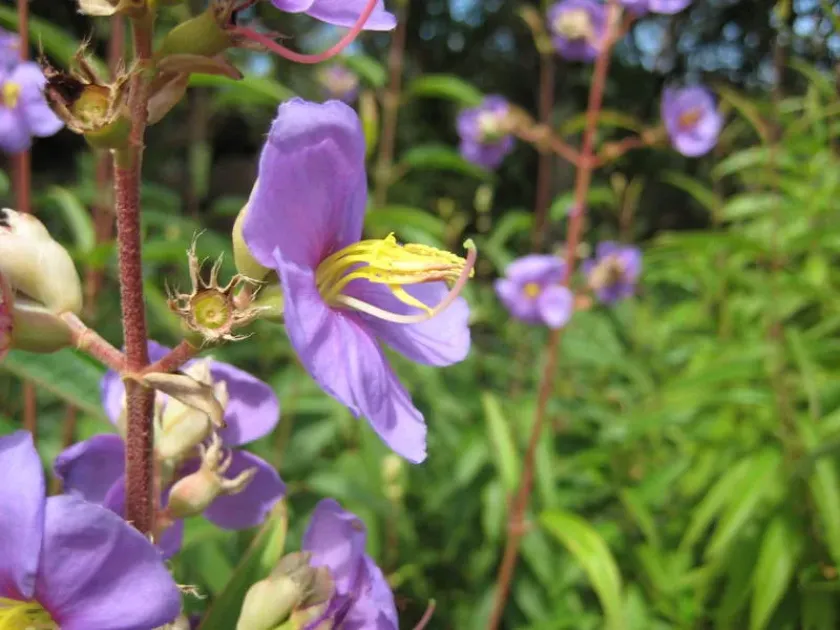
Dissotis thollonii is a distinct shrub species belonging to the Melastomataceae family, known for its vibrant purple or violet flowers and deep green foliage. It is primarily native to the tropical landscapes of sub-Saharan Africa, where it thrives in humid environments.
The climate requirements for this culture are centered on tropical conditions with consistent warmth and high humidity levels throughout the year. It does not tolerate cold temperatures or frost, which significantly limits its cultivation to specific climatic zones or climate-controlled environments.
Soil quality is paramount for the health of Dissotis thollonii, as it requires well-draining, acidic to neutral soil rich in organic matter. Proper soil structure is essential to facilitate root aeration and nutrient uptake, preventing any stagnation of moisture.
Agronomic management involves periodic pruning to maintain the plant's shape and encourage denser flowering. It is recommended to apply a balanced fertilizer during the growing season to support the high metabolic demand associated with continuous floral production.
Regarding its utility, this species is mainly utilized as an ornamental plant in landscaping and greenhouse production. Its ability to create visual interest through its aesthetic qualities makes it a valuable addition to botanical collections and tropical design projects.
Main diseases and pests
Disease management primarily focuses on fungal infections that arise due to high humidity and poor air circulation. Implementing proper ventilation and avoiding overhead irrigation can significantly reduce the risk of leaf spotting and mold growth.
Common pests include mites and scale insects which thrive on succulent plant parts. Integrated pest management strategies, including the use of neem oil or horticultural soaps, are recommended to maintain plant vitality without relying on harsh chemicals.