
Dissotis rotundifolia
Dissotis rotundifolia
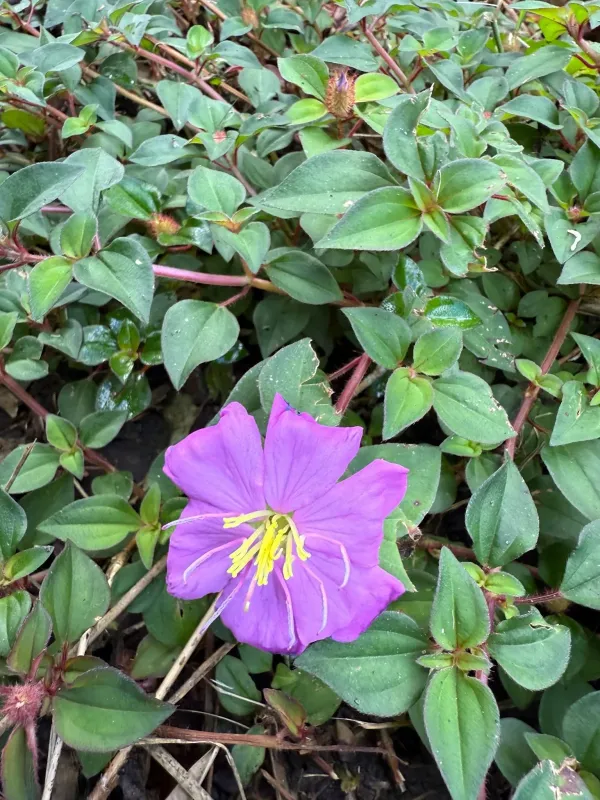
Description
Growing requirements
Dissotis rotundifolia, commonly known as the pink lady, belongs to the Melastomataceae family. It is a perennial herbaceous plant native to the tropical forests of Western and Central Africa, where it thrives in humid and warm environments.
The plant is characterized by its trailing growth habit, which allows it to form dense mats. Its circular, deep green leaves provide a perfect backdrop for the vibrant, five-petaled pink-purple flowers that bloom throughout the growing season.
Regarding cultivation, this species requires a warm climate with consistent humidity. It is highly sensitive to cold, and its growth is significantly stunted if temperatures drop below typical tropical averages. It prefers filtered light or partial shade.
Soil requirements focus on high organic content and excellent drainage. The plant grows best in slightly acidic to neutral soils that retain some moisture but prevent the root system from becoming waterlogged, which is critical for health.
In terms of agricultural and horticultural use, Dissotis rotundifolia is widely utilized as a ground cover in tropical landscapes. It effectively covers large areas, provides soil stability, and serves as an attractive border plant in garden beds.
Main diseases and pests
The primary threats to Dissotis rotundifolia involve fungal pathogens linked to environmental management. Root rot is a common issue when irrigation schedules are not synchronized with the plant's actual water uptake and drainage capacity.
Pest populations, particularly spider mites, can severely affect the plant in greenhouse or indoor settings. These pests feed on the sap of the leaves, causing stippling patterns that detract from the plant's visual appeal.
Aphids are another recurring problem, often congregating on the succulent stems and developing flower buds. Infestations need to be managed through manual removal or the application of insecticidal soaps to prevent further damage.
To maintain plant health, it is essential to ensure proper ventilation around the foliage. Crowded planting conditions often lead to increased moisture retention on the leaves, which acts as a catalyst for fungal spot diseases.
Ongoing monitoring and the removal of dead or decaying plant matter are essential practices to mitigate disease risks. Maintaining a clean growing environment prevents the build-up of potential pathogens and insect habitats.