
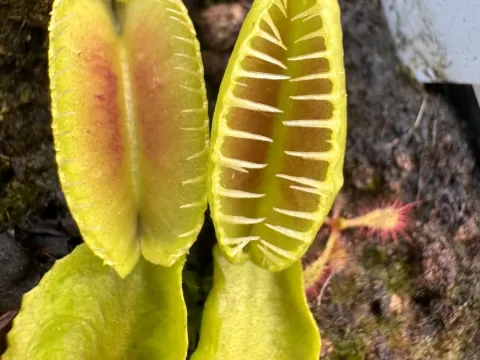
Venus flytrap
Dionaea Ellis
The Venus flytrap (Dionaea muscipula) is a carnivorous perennial belonging to the Droseraceae family. It is native to the subtropical wetlands of North and South Carolina, where it thrives in nitrogen-poor, acidic soil environments.
What the section contains

Venus flytrap
For successful cultivation, a specialized substrate is mandatory. A mixture of sphagnum peat moss and perlite or silica sand is the standard. It is strictly forbidden to use commercial fertilizers or nutrient-rich soil, as high salinity is fatal to this species.
Light intensity is the most critical factor for plant vigor. The Venus flytrap requires intense light, preferably direct sunlight for several hours a day, to trigger the development of its red coloration inside the traps and maintain a compact growth habit.
Watering requires strict adherence to purity. Only distilled, reverse osmosis, or rainwater should be used. The plant should be kept in a tray of water to ensure the substrate remains consistently moist but not stagnant.
Dormancy is a physiological necessity for this crop. During the winter months, the plant requires a cooling period with temperatures between 2°C and 10°C. This cycle is essential for long-term survival and successful growth in the following spring season.
Botrytis (gray mold) is a significant threat, especially in humid and poorly ventilated conditions. It can spread rapidly, causing the collapse of the leaf rosettes if not addressed immediately.
Aphids are the most common pests, often clustering in the heart of the plant or on the traps themselves. They suck sap from the plant, weakening the traps and preventing them from closing properly.
Improper feeding, such as providing human food or dead insects, causes the traps to rot. The digestion process relies on the insect's movement within the trap, which triggers the secretion of digestive enzymes.
Spider mites may colonize the plant during hot and dry periods, causing leaf stippling. Regular observation of the foliage is recommended to catch infestations before they become systemic.
Poor sanitation, such as using untreated water or contaminated tools, can introduce pathogens into the growing medium. Always sanitize equipment and ensure the environment is clean to minimize disease outbreaks.