
Dinteranthus wilmotianus
Dinteranthus wilmotianus
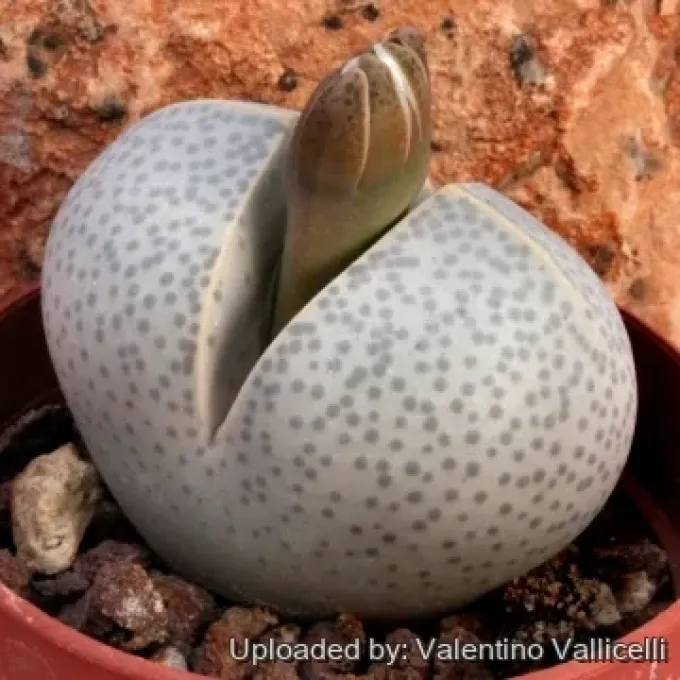
Description
Sowing dates
Propagating Dinteranthus wilmotianus is typically achieved through seeds, which should be sown during the spring season to benefit from increasing daylight hours.
The substrate for sowing must be highly permeable, consisting primarily of mineral components like coarse sand, volcanic grit, or fine gravel.
Seeds are sown on the surface and left uncovered, perhaps with a very thin dusting of sand to hold them in place without inhibiting light access.
Optimal germination occurs at temperatures between 20–25 degrees Celsius, requiring a consistent, moderate moisture level during the initial stages.
Once seedlings emerge, ventilation must be gradually increased to prevent fungal issues while maintaining the necessary balance of air movement and humidity.
Growing requirements
Dinteranthus wilmotianus belongs to the Aizoaceae family and is recognized as a typical "living stone" native to the arid environments of South Africa.
This species requires intense, direct sunlight; any deficiency in light will cause the plant to etiolate and lose its compact, stone-like characteristic.
The potting medium must be inorganic and gritty, providing exceptional drainage to ensure that no moisture accumulates around the root system.
It is essential to respect the plant's natural dormancy cycles, strictly withholding water during the hottest part of summer and the coldest part of winter.
Proper airflow is paramount, as the species is highly susceptible to tissue rupture and rot when exposed to stagnant, humid atmospheric conditions.
Main diseases and pests
Excessive watering remains the primary threat to the health of Dinteranthus wilmotianus, quickly leading to internal rot that is often fatal.
Mealybugs are the most common pests that can infest the plant, hiding in the crevices between the leaves and making them difficult to detect.
Spider mites may also pose a threat if the plant is kept in an environment with poor air circulation and excessively dry, hot conditions.
Routine inspection of the plant’s epidermis is necessary to catch any signs of pest infestation or physiological stress before they become critical.
In cases of infestation or disease, one should immediately isolate the plant and apply appropriate systemic treatments tailored for succulent health.