
Dinteranthus vanzylii
Dinteranthus vanzylii
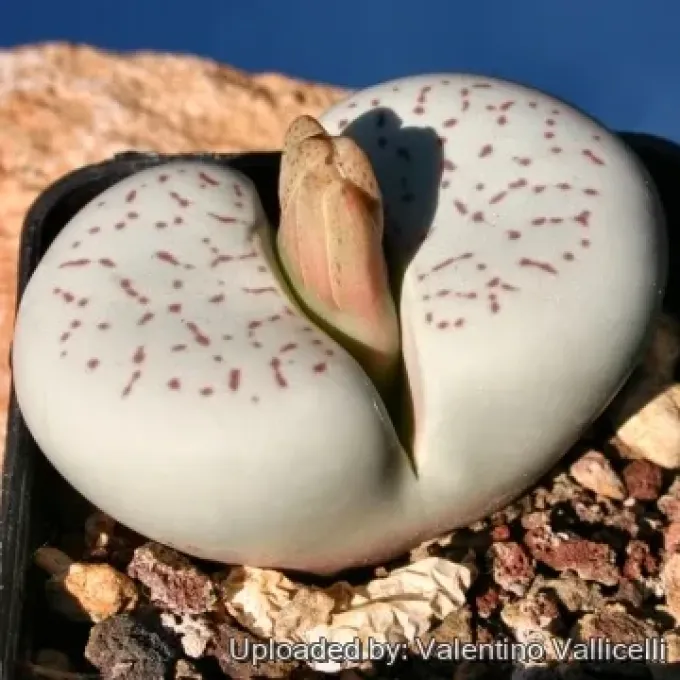
Description
Sowing dates
Sowing Dinteranthus vanzylii seeds should be done in late spring to ensure the seedlings have enough light to develop during their first months.
The seeds are extremely fine, so they must be scattered on the surface of a sterilized, mineral-based substrate and misted with water.
Maintaining high humidity and stable temperatures between 20°C and 25°C is crucial for successful germination of this succulent species.
The containers should be kept in a bright, warm location but shielded from direct, intense sunlight until the seedlings are fully established.
Transplanting the young plants is a slow process that requires patience, as Dinteranthus species are notoriously slow-growing during their juvenile stage.
Growing requirements
Dinteranthus vanzylii belongs to the Aizoaceae family and is native to the arid regions of the Northern Cape in South Africa.
This species is a typical living stone, which thrives in full sun and requires excellent ventilation to prevent overheating and fungal infections.
The substrate must be highly permeable, typically composed of pumice, coarse sand, and a small fraction of potting soil to facilitate quick drainage.
Watering requires strict adherence to the seasonal cycle: frequent but careful watering in spring and autumn, and complete drought during winter dormancy.
It is essential to avoid wetting the plant body itself during watering, as moisture trapped between the leaves can quickly cause tissue rot.
Main diseases and pests
The most significant threat to Dinteranthus vanzylii is root rot, which is usually a result of overwatering or poor soil structure.
Mealybugs are the most common pests, often settling in the crevices between the leaves and sapping the plant's vitality.
Fungal pathogens can spread rapidly if the air circulation around the plants is insufficient, leading to soft, decaying tissue.
Regular monitoring of the plants allows for early detection of potential issues before they become terminal for the succulent.
Proper hygiene, such as removing dead leaf remnants and keeping the growing area clean, is the best preventative measure against pests.