
Dinteranthus microspermus
Dinteranthus microspermus
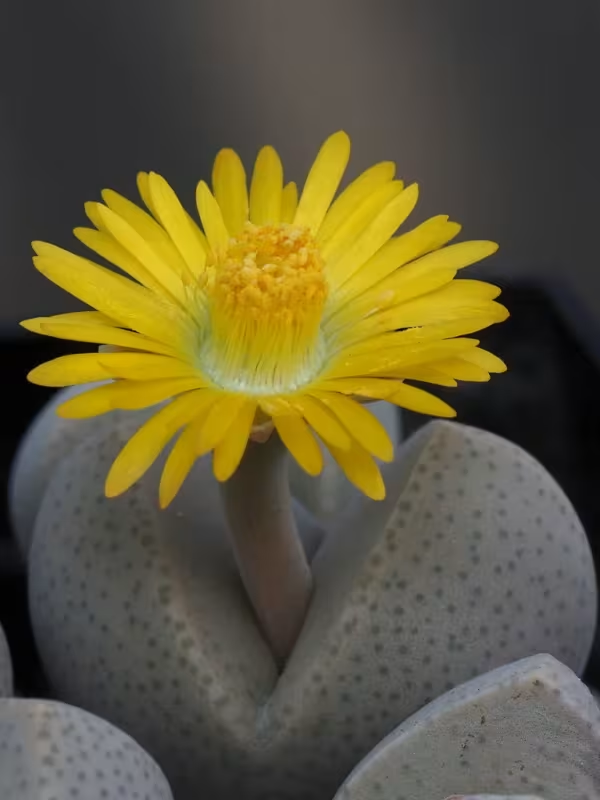
Description
Sowing dates
Sowing Dinteranthus microspermus seeds is most successful during early spring when day length is increasing, providing natural energy for seedling development.
The substrate must be extremely porous, consisting primarily of fine gravel and coarse sand, which prevents the moisture retention that can kill delicate embryos.
Seeds should be pressed gently into the substrate without covering them, as they require light to germinate effectively within the specified timeframe.
During the germination phase, maintain a constant temperature between 22 and 26 degrees Celsius to ensure the highest possible success rate for the batch.
Young seedlings should be kept in a lightly humid environment for the first month, followed by a gradual reduction in humidity to mimic their native arid habitat.
Growing requirements
Dinteranthus microspermus is a distinct genus within the Aizoaceae family, known for its extreme adaptation to the arid regions of South Africa.
The plant features a pair of thick, fused leaves that form a spherical shape, functioning as a primary reservoir for water during prolonged dry spells.
To ensure proper morphological development, the plant requires maximum solar exposure throughout the year to prevent etiolation and maintain compactness.
The soil profile must be inorganic, focusing on excellent drainage capacity to allow the roots to remain dry between the sparse watering sessions provided.
Dormancy is a critical biological stage for this species, requiring cool temperatures and absolute dryness to reset the plant's metabolic cycles.
Main diseases and pests
The most significant threat to the survival of this species is root rot caused by stagnant water, which often proves fatal within a very short period.
Pests such as mealybugs can infiltrate the crevices between the leaves, requiring careful manual removal or the use of targeted systemic insecticides.
Fungal pathogens may emerge if airflow is restricted or if the atmospheric humidity remains consistently high for several days during the growing season.
Prevention involves maintaining a strict watering regimen that strictly correlates with the plant's current physiological stage and local weather conditions.
Early identification of signs like skin yellowing or softening of the tissues is essential for the effective salvage of an infected specimen.