
Dinteranthus pole-evansii
Dinteranthus pole-evansii
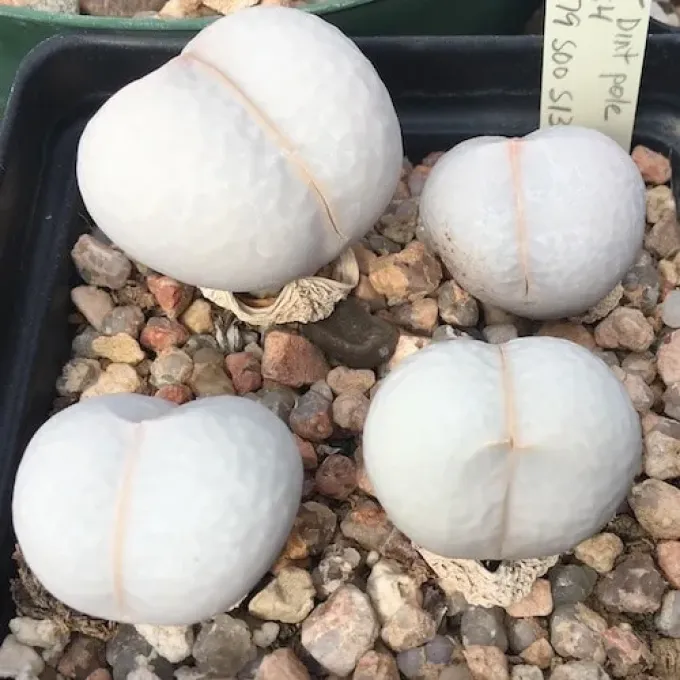
Description
Sowing dates
Sowing Dinteranthus pole-evansii seeds is best performed during the early spring when day length begins to increase, providing natural stimuli for germination. March and April are considered optimal for most temperate regions.
Use wide, shallow containers with ample drainage holes filled with a highly porous mineral substrate. Distribute the tiny seeds across the surface and lightly top-dress with fine silica sand to stabilize them.
Maintain a constant temperature between 20 and 25 degrees Celsius to trigger germination. Keep the soil surface consistently moist but not waterlogged until the first signs of life appear, typically within two weeks.
Once germination occurs, gradually reduce humidity by increasing air circulation to prevent damping-off. Keep the seedlings in bright, filtered light to ensure healthy, compact growth from the start.
Avoid repotting the seedlings for at least 12 months. Young Dinteranthus plants develop very slowly, and early disturbances can significantly hinder their root system establishment and overall vitality.
Growing requirements
Dinteranthus pole-evansii is a member of the Aizoaceae family and is widely recognized as a "living stone" succulent. It originates from the arid regions of South Africa, where it has evolved to thrive in gravelly and rocky landscapes.
This species requires intense sunlight to maintain its characteristic compact, rock-like form. Placing it in a south-facing window or under high-intensity LED grow lights is essential to prevent stretching and loss of shape.
The growing medium must be predominantly mineral-based. A mix of coarse sand, pumice, and decomposed granite is ideal, as organic matter should be kept to an absolute minimum to avoid moisture retention.
Watering requires strict seasonal adjustment: water sparingly during the active growth period after the soil has completely dried out. Cease all watering during the dormant winter phase to replicate the dry African winter.
Proper air movement is crucial for the health of this succulent. Stagnant air combined with moisture can lead to rapid decay, as the plant is built to lose water quickly and survive on very little moisture.
Main diseases and pests
The primary threat to Dinteranthus pole-evansii is overwatering, which quickly causes the internal tissues to burst or decay. Root rot is rarely reversible, making precise irrigation management the most vital aspect of care.
Mealybugs are the most common pest, often colonizing the crevices between the fleshy leaf lobes. Because the plant mimics a stone, these insects can be hard to spot until a significant infestation occurs.
Spider mites may occasionally attack the plant if the air in the growing area is consistently hot and still. Keeping the environment well-ventilated helps mitigate the risk of mite outbreaks.
Root-knot nematodes can weaken the plant by attacking its base, leading to stunted growth. Using sterilized, high-quality volcanic materials instead of contaminated garden soil is the best way to prevent this.
Secondary fungal infections often occur after minor tissue damage or mechanical injuries. Keeping the epidermis dry and free of debris is essential for maintaining the plant’s natural defenses against pathogens.