
Dimorphotheca hybrids
Dimorphotheca hybrids
Description
Sowing dates
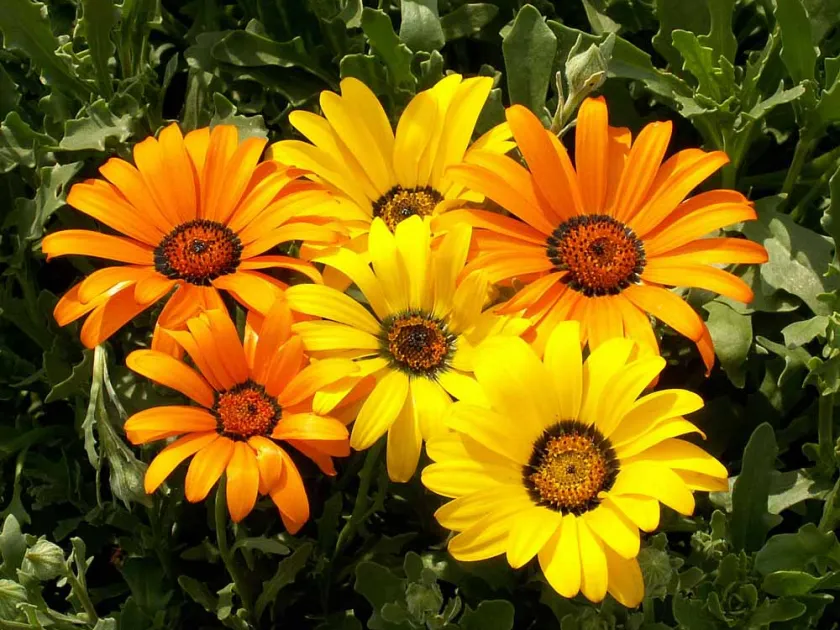
Dimorphotheca hybrids are flowering annuals belonging to the Asteraceae family. Native to the arid regions of South Africa, these plants are highly adapted to sunny environments and periods of water scarcity, making them an excellent choice for sunny garden beds.
Sowing should be done directly into the garden soil in late spring, once the threat of frost has completely passed. The seeds are small and should be covered with a thin layer of soil; they typically germinate within one to two weeks under favorable conditions.
Transplanting can be stressful for these plants, so if starting indoors, it is best to use biodegradable peat pots that can be placed directly into the ground. This minimizes root disturbance and ensures the plants establish themselves quickly in their permanent location.
The plants require well-draining, sandy or loamy soil. Heavy, clay-heavy soils that retain too much moisture should be amended with organic matter or grit to improve aeration and prevent the root rot to which this species is susceptible.
In landscaping, these hybrids are used to add vibrant color to borders, rock gardens, and container displays. They are favored for their prolific blooming, which continues throughout the summer months as long as the plants receive adequate sunlight.
Growing requirements
Full sun is a non-negotiable requirement for Dimorphotheca hybrids. The flowers are heliotropic and reactive, meaning they open fully only in bright sunlight and may close during cloudy weather or at night to protect their reproductive organs.
Watering should be moderate. While these plants are drought-tolerant, they benefit from regular watering during extended dry spells to produce the best bloom. However, it is essential to allow the soil to dry out between watering sessions to avoid fungal issues.
The soil should have a neutral pH level. Nutrient-rich soils are not always necessary, and in fact, excessive fertilization can lead to vigorous foliage growth at the expense of flower production, which is undesirable for a ornamental crop.
Deadheading is highly recommended to encourage repeat blooming. By removing faded flowers, the plant directs its energy toward producing new buds rather than focusing on seed maturation, which significantly prolongs the visual appeal of the garden.
As these plants are not frost-hardy, they complete their lifecycle within a single season in temperate climates. Removal and disposal of plant debris at the end of the season help to keep the garden plot clean and prevent carryover of pests.
Main diseases and pests
Fungal diseases, particularly grey mould (Botrytis), are common if the plants are kept in excessively humid or damp conditions. Proper spacing is vital to ensure adequate air circulation between the plants to mitigate this risk.
Root rot is a major threat caused by overwatering or poor drainage. Once roots begin to decay, the plant usually collapses rapidly, and recovery is often impossible, making prevention the best strategy in cultivation.
Aphids are the most frequent insect pest, often clustering on the undersides of leaves and on succulent flower stalks. They weaken the plant by feeding on sap and can act as vectors for various plant viruses.
Spider mites can also become a problem during periods of hot, dry weather. They cause foliage to appear speckled or bleached and may create fine webbing between the stems, eventually leading to premature leaf drop.
To manage these threats, integrated pest management practices should be employed. Regular inspection of the crop allows for early detection of issues, and manual removal or the application of appropriate pesticides can prevent significant damage.