
Dimorphotheca caulescens
Dimorphotheca caulescens
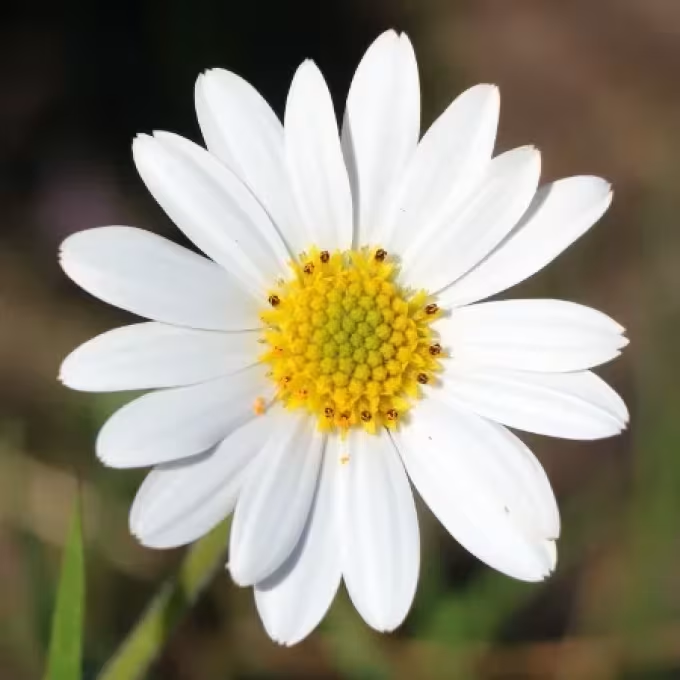
Description
Sowing dates
Dimorphotheca caulescens is a captivating member of the Asteraceae family, originating from the sun-drenched landscapes of Southern Africa. Due to its frost sensitivity, it is typically grown as an annual in cooler climates.
For early bloom, seeds should be sown indoors in late March or early April. Use a light, well-draining seed-starting mix to ensure healthy root development during the initial growth phase.
Seeds require light to germinate; therefore, they should be sown on the surface of the soil or covered with an extremely thin layer of substrate. Keep the seed trays in a bright, warm location with temperatures around +20°C.
Once the seedlings develop their first true leaves, they should be pricked out into individual pots. This practice prevents overcrowding and encourages the development of a strong, robust root system before transplanting.
Outdoor planting occurs only after the danger of frost has passed. Hardening off the seedlings for at least a week before setting them out in the garden is essential for their successful adaptation to outdoor conditions.
Growing requirements
This species thrives in full sun exposure. It requires at least 6 to 8 hours of direct sunlight daily to produce vibrant, open blooms throughout the entire growing season.
The soil should be sandy or loamy and possess excellent drainage characteristics. Dimorphotheca caulescens cannot survive in heavy, waterlogged soils, which are prone to root suffocation.
Regarding moisture, the plant is highly drought-tolerant once established. Watering should be moderate, allowing the top layer of soil to dry out significantly between irrigation sessions to prevent fungal issues.
Nutrient requirements are modest. Excessive fertilization, especially with nitrogen, should be avoided, as it promotes excessive foliage growth at the expense of flower production.
Spacings should be maintained at 25 cm apart to ensure good airflow. Proper ventilation is a critical factor in maintaining plant health and preventing common foliage diseases during periods of high humidity.
Main diseases and pests
Gray mold (Botrytis cinerea) is the most significant disease threat, particularly in regions with high humidity or poor airflow. It manifests as fuzzy gray growth on leaves and flowers.
Aphids are the primary insect pests affecting this plant. These sap-sucking insects cluster on the tender tips and buds, potentially causing stunted growth and transmitting viral pathogens.
Root rot is common if the soil drainage is inadequate. Overwatering acts as a primary stress factor, weakening the plant's natural defense mechanisms against soil-borne pathogens.
Spider mites may become a problem during hot, dry weather. Regular inspection of the undersides of the leaves can help identify an infestation early before it spreads to adjacent plants.
To minimize pest and disease incidence, always practice good sanitation by removing fallen debris and deadheading spent blooms, which helps direct the plant's energy toward continuous flowering.