
Late crabgrass
Digitaria serotina
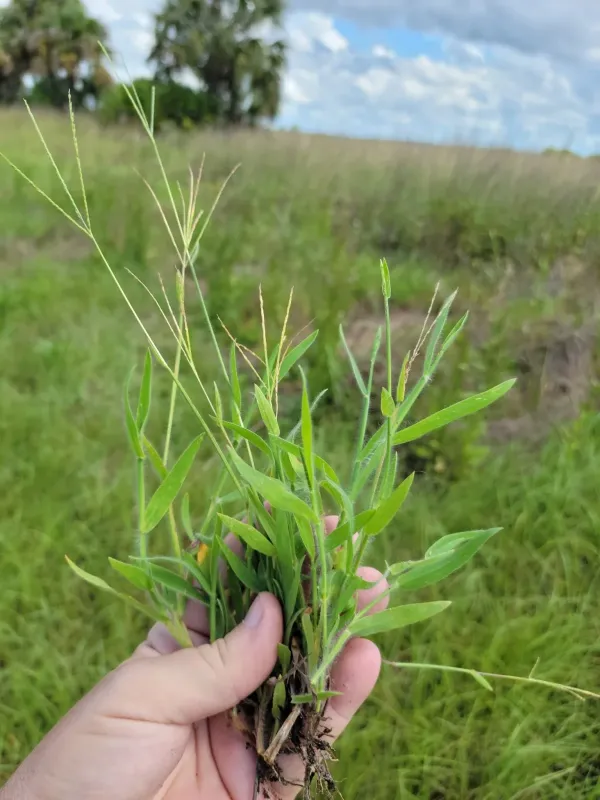
Description
Sowing dates
Late crabgrass belongs to heat-loving grass species, so sowing dates should coincide with periods of stable soil warming, reaching 15–18°C in the top layer.
In temperate climates, it is recommended to sow in late spring to avoid late frosts, which can be detrimental to young seedlings.
When using seed drills, it is important to maintain an optimal planting depth of no more than 1–2 centimeters for these small seeds.
Good contact between the seeds and moist soil ensures uniform germination, which is why soil rolling is often applied after sowing.
To establish a full grass stand, seeding rates are calculated based on the purity of the seed material and the target density of the future crop.
Growing requirements
The plant is a member of the Poaceae family and prefers well-drained, sandy, or light loamy soils with moderate moisture content.
Late crabgrass is highly demanding regarding light, requiring open and well-illuminated plots throughout the entire daylight period for successful development.
While the crop shows some tolerance to dry periods, maximum vegetative biomass requires regular irrigation or sufficient rainfall during the growing season.
The optimal soil pH range for the plant's success is near-neutral, which facilitates better uptake of essential nutrients.
Nitrogen fertilization plays a key role in the crop's nutrition program, stimulating intensive green mass production during the active tillering phase.
Yield
The yield of late crabgrass depends directly on the agronomic practices applied and the availability of water during critical growth stages.
With correct management, the crop is capable of providing multiple cuttings per growing season, significantly increasing total productivity per hectare.
Peak nutritional value of the green mass is achieved before the heading stage, when the plant contains the highest concentrations of protein and sugars.
To maintain high productivity in perennial stands, moderate grazing or regular mowing is recommended to manage the growth cycle.
The rate of biomass accumulation makes this species a promising candidate for forage production in regions with long, hot summers.
Main diseases and pests
Like other grass species, late crabgrass can be affected by various rusts and leaf spots that thrive under high humidity conditions.
Among pests, cereal flies and aphids pose the greatest risk, as they damage young stems and reduce the overall vigor of the crop stand.
Disease prevention involves strict crop rotation and avoiding soil compaction, which reduces the risk of root rot pathogens spreading.
For large-scale pest control, integrated protection methods are employed, combining biological and chemical control measures.
- Regular monitoring of the phytosanitary status of the crop.
- Maintenance of optimal plant stand density.
- Timely harvesting to prevent the spread of pathogens.
Harvesting
Late crabgrass is harvested at the jointing or early heading stage, when the leaf-to-stem ratio is most favorable for livestock consumption.
When preparing hay, it is essential to ensure rapid drying of the cut biomass to preserve vitamin content and prevent fungal growth.
Mechanical harvesting is typically carried out using mower-conditioners, which accelerate moisture evaporation from the plant tissues.
Cutting height should be moderate to avoid damaging the tillering nodes, which is critical for successful regrowth of the aftermath.
Finished forage must be stored in well-ventilated areas with low humidity to prevent quality loss and ensure long-term nutritional integrity.