
Large crabgrass
Digitaria magna
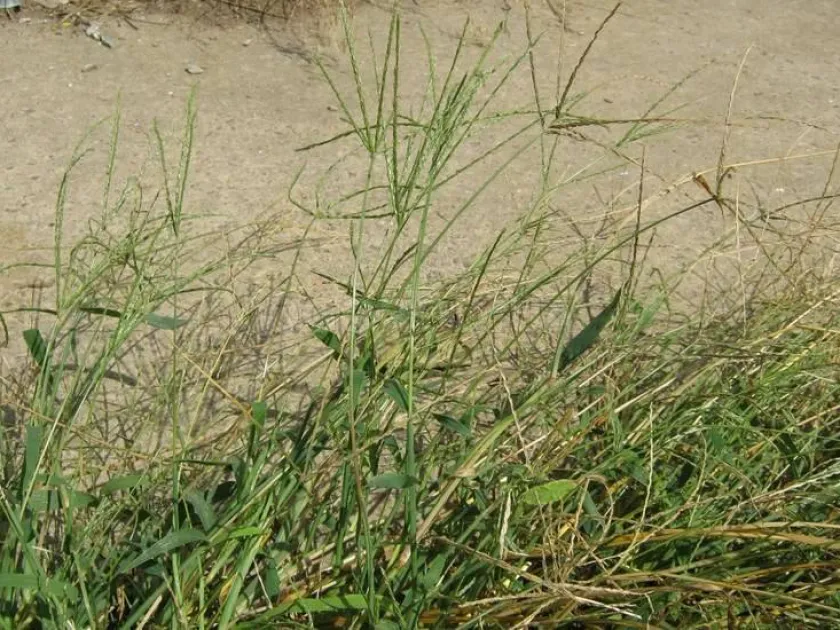
Description
Sowing dates
The seeds of Digitaria magna exhibit high germination energy when soil temperatures reach 15–18 degrees Celsius. The optimal sowing time is in late spring, as the crop is highly sensitive to cold nights and late frosts during its early development stages.
The seeding depth should be maintained at 1–2 centimeters, which is dictated by the small size of the seeds. It is crucial to ensure good soil-to-seed contact to facilitate capillary water movement, which is essential for successful seedling emergence in dry spring conditions.
Seeding rates vary depending on the intended use; sparse sowing is preferred for biomass production, while row planting with spacing up to 30 centimeters is ideal for seed multiplication.
Germination requires consistent soil moisture, so mulching is often practiced after sowing to prevent the formation of a soil crust that can hinder the development of young shoots.
In regions with shorter growing seasons, seed stratification is recommended to improve field emergence rates and shorten the duration required to reach the active tillering phase.
Growing requirements
Digitaria magna belongs to the Poaceae family and is a warm-season grass. It thrives in well-lit areas with light, fertile sandy or loamy soils that offer excellent aeration and drainage properties.
While the plant shows high drought tolerance once established, it is sensitive to water deficit during its active vegetative growth phase, which significantly impacts total biomass yield.
Soils should ideally have a neutral or slightly acidic pH. Excessive soil acidification or waterlogging can inhibit root system development and make the plant more susceptible to secondary fungal infections.
The availability of nitrogen during early growth stages is a critical factor. Starter fertilizers allow the plant to quickly develop a dense leaf canopy, which helps in suppressing weed competition during the establishment phase.
The optimal temperature for growth ranges between 22–28 degrees Celsius. Growth slows significantly below 10 degrees, effectively limiting its range of cultivation to warmer climatic zones.
Yield
The green biomass yield of large crabgrass can be substantial under intensive cultivation management. Proper irrigation combined with balanced fertilization enables up to three harvests per season in favorable conditions.
When used as a forage crop, timely harvesting is paramount. As the plant enters the heading stage, the nutritional value of the leaves declines rapidly due to increased lignin accumulation and stem lignification.
Average dry matter yields range from 4 to 7 tons per hectare, depending on soil fertility and the level of agronomic support. High yields are closely correlated with maintaining optimal plant density per unit area.
Seed production yields are generally lower due to the wider row spacing required for maturation. However, the high germination energy of the seeds allows for efficient crop establishment in subsequent seasons.
Optimizing micronutrient levels can increase total productivity by 15–20%, even on moderately fertile soils, making the crop a viable economic option for specialized forage production.
Main diseases and pests
The primary threats to Digitaria magna crops are fungal diseases that flourish in high humidity and dense canopy conditions. Common issues include various rust species and helminthosporium blight.
Systemic fungicides are recommended for disease management. It is important to initiate preventative measures during the early stem elongation phase to prevent the widespread distribution of fungal spores across the field.
Pests such as grass flies and thrips can cause significant damage to young seedlings by feeding on plant sap. Early detection and the prompt application of selective insecticides are necessary to minimize losses.
Weed competition is mainly a concern during the initial establishment period. Once the canopy closes, the rapid growth of large crabgrass allows it to outcompete most common weeds effectively.
Crop rotation is the most effective defense against the buildup of soil-borne pathogens. Planting this crop immediately after other grasses should be avoided to prevent the transfer of specific diseases via soil residue.