
Smooth crabgrass
Digitaria ischaemum
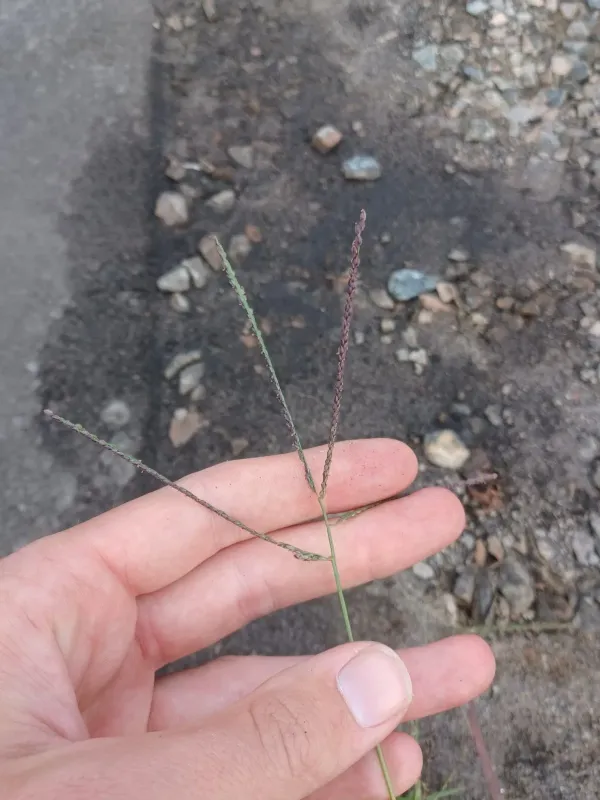
Description
Sowing dates
Smooth crabgrass (Digitaria ischaemum) is an annual grass species that typically begins to emerge when soil temperatures consistently reach 12–15 degrees Celsius.
The seeds of this plant exhibit an extended germination window throughout the growing season, posing a challenge for early-season weed control.
Initial emergence usually occurs in late spring, following the first substantial warming periods that define the beginning of the planting season.
Because of the staggered germination pattern, continuous monitoring and timely application of control measures are essential for field management.
Seedlings are most sensitive to burial, and shallow mechanical cultivation during the early stages of development effectively inhibits their establishment.
Growing requirements
This weed thrives in well-lit environments and shows a strong preference for light, sandy, and well-drained soil types across various agro-ecological zones.
It is highly sensitive to shading, which is why it often dominates in sparse crop stands where canopy closure is delayed or incomplete.
The species possesses significant drought tolerance, allowing it to survive in adverse moisture conditions that might hinder other plant growth.
It adapts to a wide pH range, showing the ability to colonize fields with both slightly acidic and neutral soil profiles successfully.
Growth is rapid under warm and humid conditions, which frequently coincide with the peak development period of summer row crops.
Main diseases and pests
Smooth crabgrass is rarely subject to specific diseases, as it acts primarily as a host for various viruses that negatively impact cereal crops.
Pest pressure is minimal, allowing the plant to allocate its energy toward rapid vegetative expansion and prolific seed production.
The primary agricultural threat involves direct competition for nitrogen, phosphorus, and moisture, which causes significant yield reductions.
Management practices include the application of pre-emergence and post-emergence graminicides to prevent competition during critical growth stages.
Cultural control strategies, such as maintaining optimal crop density and competitive sowing, are vital to minimize the impact of this weed.