
Dicranella varia
Dicranella varia
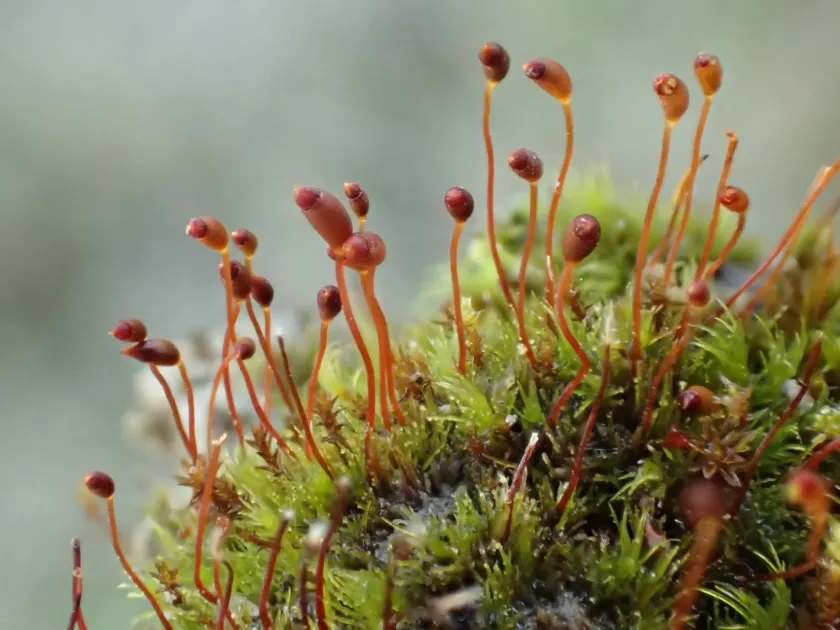
Description
Growing requirements
Dicranella varia is a species of moss in the family Dicranaceae. While it does not serve as a traditional agricultural crop, it is a significant element of soil-dwelling vegetation in disturbed habitats across temperate regions of the Northern Hemisphere.
The plant is typically found in moist environments, such as clay banks, woodland edges, and industrial sites where soil has been exposed. It is known for its ability to colonize mineral-rich substrates, often showing a preference for calcareous soil types.
Morphologically, the plant forms small, yellowish-green to olive-green tufts. Its leaves are narrow and lanceolate, and they exhibit distinct patterns of contraction and expansion depending on the moisture level of the surrounding air and substrate.
It requires stable moisture levels to thrive and is sensitive to extreme desiccation. Ideal conditions include partial shade, which prevents the rapid evaporation of moisture from the delicate gametophytes while providing sufficient light for photosynthesis.
There are no farming practices associated with this species as it is an uncultivated wild plant. However, in ecological monitoring, its presence is a reliable indicator of specific environmental parameters, including soil texture and hydration.
Main diseases and pests
Significant threats to the population of Dicranella varia include habitat loss due to land development and intensive agricultural activities that disrupt the topsoil layer.
The use of herbicides and high levels of synthetic nitrogen fertilizers can be toxic to bryophytes, significantly altering the competitive balance of the local microflora.
Rapid succession by vascular plants, such as grasses and shrubs, often shades out the moss, leading to a decline in population density due to insufficient light penetration.
Alterations in local drainage patterns, such as drainage for irrigation or infrastructure, can destroy the specialized micro-habitats required for the moss to complete its reproductive cycle.
While resistant to many environmental stresses, the moss is vulnerable to trampling by livestock, which physically breaks down the tufts and damages the fragile reproductive organs.