
Dichanthium caricosum
Dichanthium caricosum (L.) A. Camus
Description
Growing requirements
Dichanthium caricosum, commonly known as a member of the Poaceae family, is a perennial grass native to tropical and subtropical regions of Asia. It is highly valued for its ability to thrive in diverse environments, ranging from grasslands to flood-prone pastures.
The plant performs best in fertile, well-drained loams but is notably tolerant of clay soils and seasonal waterlogging. This adaptability makes it an excellent choice for reclamation of degraded or difficult land in tropical farming systems.
In terms of climatic requirements, this grass is a warm-season species that thrives in high-temperature conditions. It is extremely heliophilic, requiring maximum sun exposure to maintain rapid vegetative growth and high biomass production throughout the season.
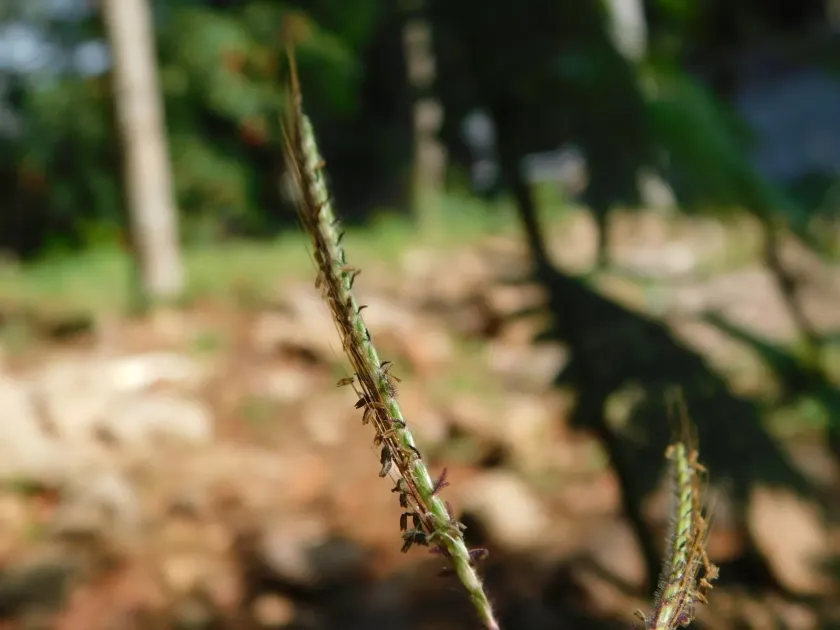
Botanically, it is characterized by trailing or decumbent culms that readily root at the nodes. The inflorescence is a digitate or sub-digitate raceme structure, which is a diagnostic feature used for the identification of this specific genus within the Andropogoneae tribe.
As a forage crop, it is extensively used for grazing livestock, offering high palatability and nutritional value. It is also suitable for hay production if harvested before the lignification of the stems, ensuring optimal quality for storage.
Main diseases and pests
Leaf rust and various fungal blights pose the most significant threat to Dichanthium caricosum, especially during periods of high humidity. Improved pasture management, such as rotational grazing, can help reduce the pathogen pressure on the crop.
Insect pests include various species of lepidopteran larvae and grasshoppers that target the succulent foliage. Monitoring and early intervention are essential to prevent significant loss of photosynthetic leaf area and subsequent yield reduction.