
Desmos zeylanicus
Desmos zeylanicus
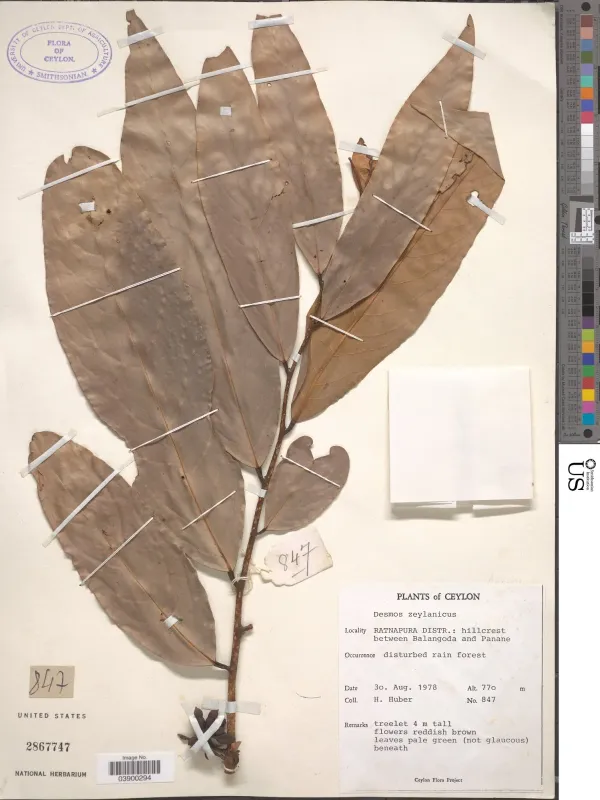
Description
Growing requirements
Desmos zeylanicus is an exotic plant belonging to the Annonaceae family. It naturally grows as a woody shrub or a small tree characterized by its fragrant flowers and distinctive foliage architecture, typical of the tropical ecosystems it inhabits.
The native distribution of the species is primarily centered in Sri Lanka and neighboring regions of South Asia. It thrives in environments that provide consistent warmth and high humidity levels, avoiding extreme seasonal fluctuations throughout the year.
Successful cultivation requires nutrient-rich, well-draining soils with a slightly acidic to neutral pH level. Proper site selection is essential, as the species demands a balance between partial sunlight and shade to prevent potential leaf desiccation caused by intense tropical sun.
Agrotechnical management involves maintaining stable soil moisture levels. Since the plant is sensitive to waterlogging, efficient drainage systems are mandatory in agricultural settings to prevent root asphyxiation during periods of heavy monsoon rains.
The economic significance of Desmos zeylanicus is linked to the aromatic industry. The essential oils derived from its flowers are utilized for their therapeutic properties and are incorporated into traditional medical practices as well as contemporary fragrance formulations.
Main diseases and pests
Fungal diseases represent a significant threat to the crop, particularly under conditions of poor air circulation and excessive ambient moisture. Pathogenic fungi can cause stem cankers and leaf spots that degrade the quality of the harvested floral material.
Common pests such as mealybugs and spider mites are known to infest the plant, causing significant stress. Integrated Pest Management (IPM) strategies, including biological control agents, are recommended to protect the crop without compromising the purity of the harvested essential oils.
Soil-borne pathogens, including various nematodes, can affect plant health by damaging the root system. This necessitates strict adherence to pre-planting soil sterilization techniques and the use of healthy, nursery-grown planting material for establishing new areas.
Nutrient deficiency, specifically related to trace elements, can lead to stunted growth and reduced floral yields. Regular soil analysis is recommended to ensure balanced fertilization, focusing on the specific needs of the Annonaceae family members during their active growth cycle.
Mechanical damage during harvesting poses another risk for plant health, as open wounds can serve as entry points for bacterial infections. Sharp pruning tools must be used to minimize tissue damage, followed by appropriate treatments if the plantation is situated in a high-risk pathogen environment.