
Dendrochilum wenzelii
Dendrochilum wenzelii
Description
Growing requirements
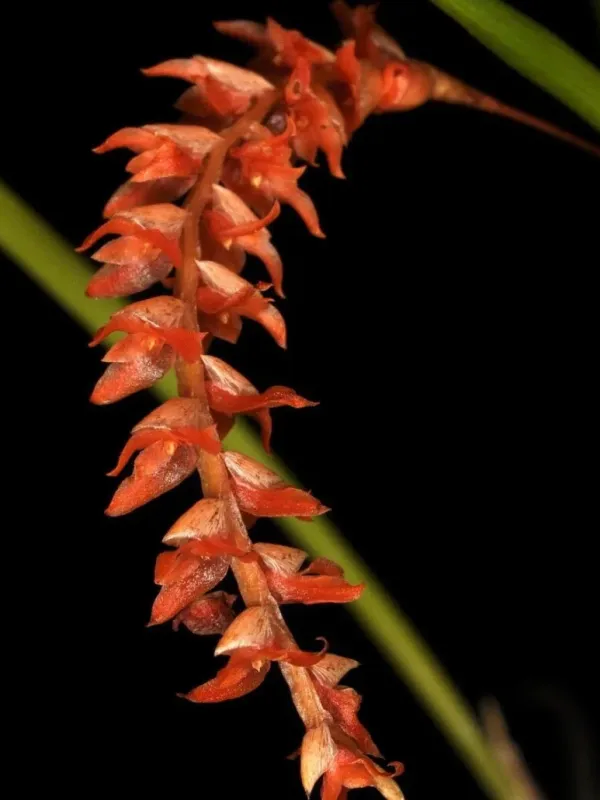
Dendrochilum wenzelii is an epiphytic orchid species belonging to the Orchidaceae family, native to the tropical forests of the Philippines. It is highly regarded in horticulture for its dense, arching racemes of small, fragrant, golden-yellow or reddish flowers that emerge from pseudobulbs.
The culture thrives in warm, humid conditions with temperatures ranging from 18°C to 25°C. Maintaining a consistent environment with moderate fluctuations between day and night temperatures is essential for stimulating healthy vegetative growth and subsequent flowering cycles.
High relative humidity, ideally between 60% and 80%, is vital for this species. In indoor environments, this is typically achieved through regular misting, the use of humidifiers, or placing the pots on moisture-retentive trays to mimic the tropical forest atmosphere.
The substrate must be well-draining and airy to prevent root rot. A standard mix consists of fine-grade fir bark, perlite, charcoal, and a small amount of sphagnum moss. This composition allows for proper moisture retention while ensuring that air can freely circulate around the roots.
Bright, indirect light is required for optimal performance. Direct midday sun can damage the foliage, causing yellowing or scorch marks. Proper light exposure is a key factor in ensuring the plant stores enough energy for its impressive, pendulous inflorescences.
Main diseases and pests
The primary threats to Dendrochilum wenzelii are fungal pathogens, specifically those causing root and crown rot due to overwatering or inadequate aeration. Ensuring the potting medium dries out slightly between waterings is the most effective preventative measure against these diseases.
Spider mites are a common pest in indoor environments with low humidity, and they can cause significant damage by piercing leaf tissue. Maintaining optimal humidity levels and ensuring good airflow help to suppress mite populations and keep the plant vigorous.
Scale insects and mealybugs can also infest the plant, hiding in the junctions of leaves and pseudobulbs. If detected early, these can be managed with systemic insecticides or by physical removal using cotton swabs dipped in diluted alcohol or insecticidal soap.
Bacterial infections, often manifesting as soft, foul-smelling spots, can occur if water remains trapped in the center of new growths. If such symptoms are noted, affected plant parts should be excised with sterile tools, and the plant should be treated with appropriate bactericides.
To minimize disease pressure, it is crucial to avoid splashing water directly onto the foliage during evening hours. Constant air movement within the growing area is essential for maintaining plant hygiene and preventing the accumulation of moisture that encourages fungal growth.