
Dendrochilum glumaceum
Dendrochilum glumaceum
Description
Growing requirements
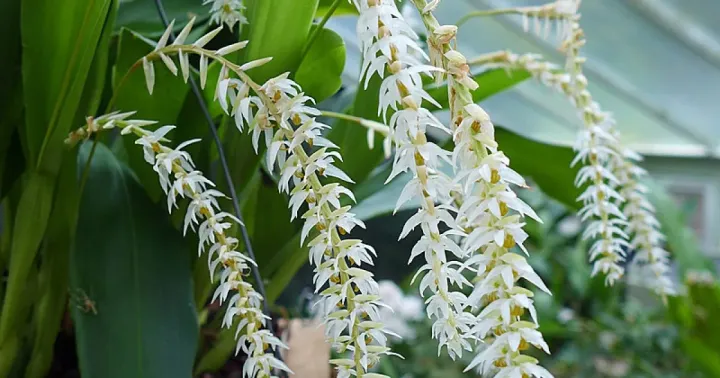
Dendrochilum glumaceum is a highly fragrant orchid species belonging to the Orchidaceae family. Native to the Philippines, this epiphytic plant typically grows in cool to warm mountain cloud forests, thriving in high humidity and constant air circulation.
The plant features distinct, small pseudobulbs, each bearing a single, long, leathery leaf. During the blooming season, it produces graceful, pendulous racemes of tiny, cream-colored flowers that are highly valued by collectors for their intense, spicy fragrance.
Cultivation requires a steady temperature range, ideally between 18°C and 25°C. While it is tolerant of minor fluctuations, the plant must be protected from extreme heat and freezing temperatures, which can severely damage the plant's delicate vascular system.
A well-draining substrate is critical for the health of its roots. A mix consisting of fine fir bark, perlite, and a small amount of live sphagnum moss helps to maintain appropriate moisture levels while allowing air to reach the roots, preventing suffocation.
Consistent light is necessary for healthy development. While D. glumaceum enjoys bright, filtered light, intense direct sunlight will burn the foliage. Placing the plant in a position with early morning sun or using artificial light sources is highly recommended.
Main diseases and pests
Common pests such as spider mites and scale insects often target this orchid, especially in dry indoor conditions. These pests suck sap from the pseudobulbs and leaves, leading to yellowing, stunted growth, and a general decline in the plant's health.
Root rot is the most common physiological disorder caused by overwatering or using compacted, poorly draining potting media. Once the roots are compromised, the plant struggles to uptake nutrients, often leading to rapid decline and death of the pseudobulbs.
Fungal leaf spot diseases can occur if water remains on the leaves for extended periods, particularly in environments with poor ventilation. To mitigate this, ensure that water is applied directly to the substrate and not over the leaves or growth points.
Bacterial soft rot is a dangerous condition that can quickly destroy a healthy plant. It usually appears as dark, water-soaked patches that spread rapidly, necessitating the removal of infected parts with sterilized tools and applying topical antiseptic treatments.
Preventive maintenance, including regular cleaning of the growing area and quarantine of new plants, is essential. Keeping the plant properly hydrated but ensuring the leaves remain dry will prevent the majority of common horticultural diseases.