
Dendrochilum aurantiacum
Dendrochilum aurantiacum
Description
Growing requirements
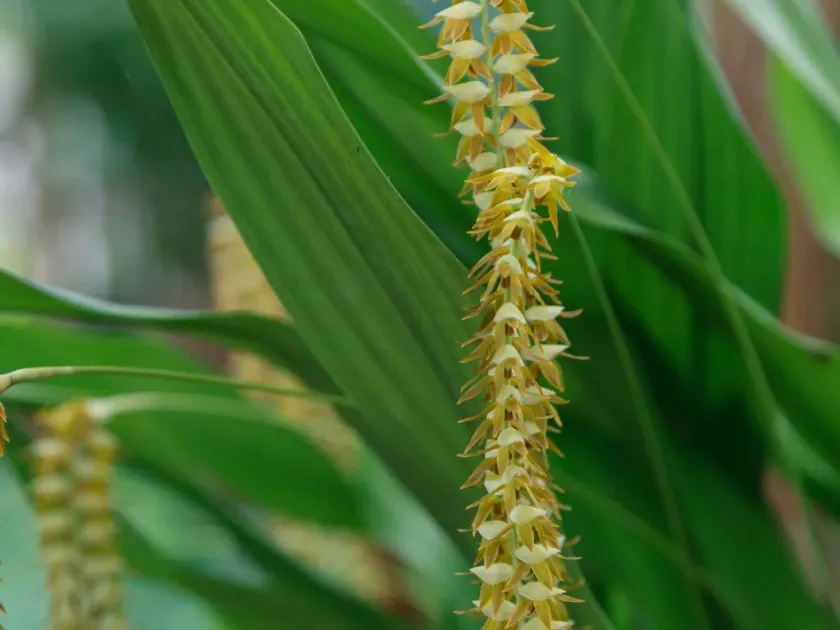
Dendrochilum aurantiacum is an elegant epiphytic orchid belonging to the Orchidaceae family. It is native to the tropical rainforests of the Philippines, where it typically grows on tree branches in humid, shaded environments.
Botanically, this species is characterized by its small, clustered pseudobulbs and slender, leathery leaves. The most striking feature is its inflorescence, consisting of numerous tiny, fragrant, orange-colored flowers arranged in graceful drooping chains.
Temperature requirements for this species include maintaining a moderate climate. The plant thrives in daytime temperatures between 18 and 24 degrees Celsius, with a slight drop in temperature during the night to stimulate healthy growth and blooming.
The culture requires a loose, well-draining substrate to replicate its natural epiphytic habitat. A mixture of pine bark, perlite, and a small amount of sphagnum moss is ideal for providing the necessary root aeration while maintaining moisture.
High relative humidity, ideally above 70%, is essential for the plant's health. In indoor cultivation, this is achieved through the use of humidifiers, gravel trays with water, or regular misting during the warmer parts of the day.
Main diseases and pests
The primary threats to Dendrochilum aurantiacum are fungal diseases caused by waterlogged substrate or poor air circulation. Overwatering leads to root rot, which is difficult to treat once it reaches the pseudobulbs.
Spider mites are common pests that thrive in low-humidity environments. They cause damage by sucking sap from the leaves, resulting in stunted growth and the appearance of yellow stippling across the foliage.
Mealybugs are another frequent issue, often found hiding in the leaf axils or near the base of the pseudobulbs. Their presence is indicated by a white, cottony substance, which requires prompt cleaning and insecticide treatment.
Scale insects can also infest the plant, adhering to the stems and leaves. If not managed early, these pests can seriously weaken the orchid, leaving it susceptible to secondary bacterial infections that spread through plant tissues.
Proactive care, including consistent monitoring and maintaining optimal ventilation, is the best strategy against these threats. Using sterile equipment for any trimming or division processes further minimizes the risk of introducing pathogens.