
Daphniphyllum teijsmannii
Daphniphyllum teijsmannii
Description
Growing requirements
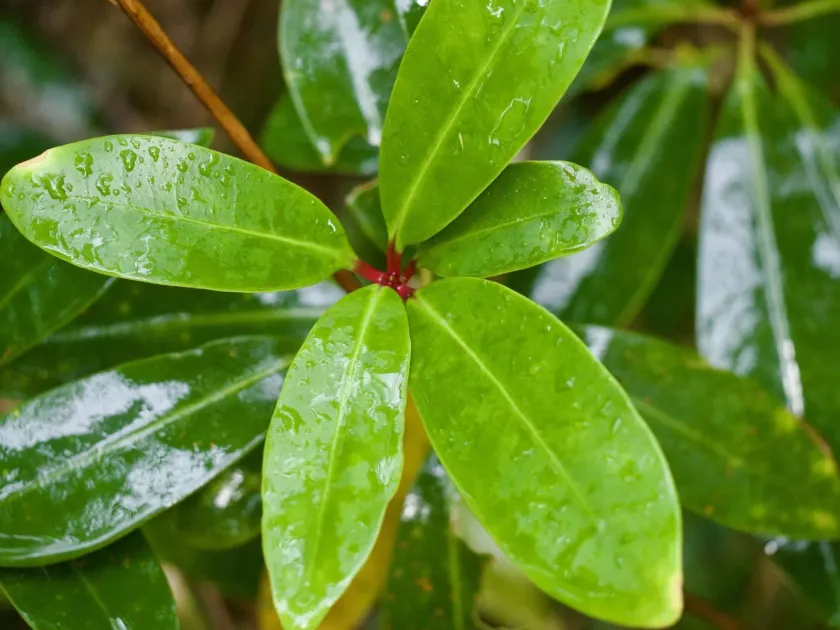
Daphniphyllum teijsmannii is an evergreen shrub belonging to the Daphniphyllaceae family. It is highly valued for its lush, dark green foliage, which provides a structural and elegant appearance, often compared to the aesthetic of rhododendrons.
The plant originates from the temperate and subtropical forests of East Asia. In its native range, it thrives in deep, fertile soils with high humidity levels, often growing in the shaded understory layer of forest ecosystems.
For successful cultivation, it requires well-drained, slightly acidic soil rich in organic matter. While it is adaptable to various soil types, the primary requirement is moisture retention combined with excellent aeration to prevent root rot.
The climate requirements for this species focus on protection from harsh winter winds and extreme cold. It performs best in sheltered locations with partial shade, which protects the leaves from bleaching during peak summer heat in sunny regions.
In landscaping, it is used for ornamental hedging, privacy screens, and as a focal point in shade gardens. Its slow-to-moderate growth habit makes it easy to maintain, requiring minimal pruning compared to faster-growing evergreen hedge plants.
Main diseases and pests
Primary pests that affect this species include scale insects, which can settle on stems and undersides of leaves, extracting plant sap and potentially causing stunted growth and yellowing of the foliage.
Diseases are mostly related to poor soil management, specifically Phytophthora root rots resulting from waterlogged conditions. Maintaining good drainage and using organic fertilizers are essential practices to ensure the plant remains vigorous and disease-free.