
Daphniphyllum glaucescens
Daphniphyllum glaucescens
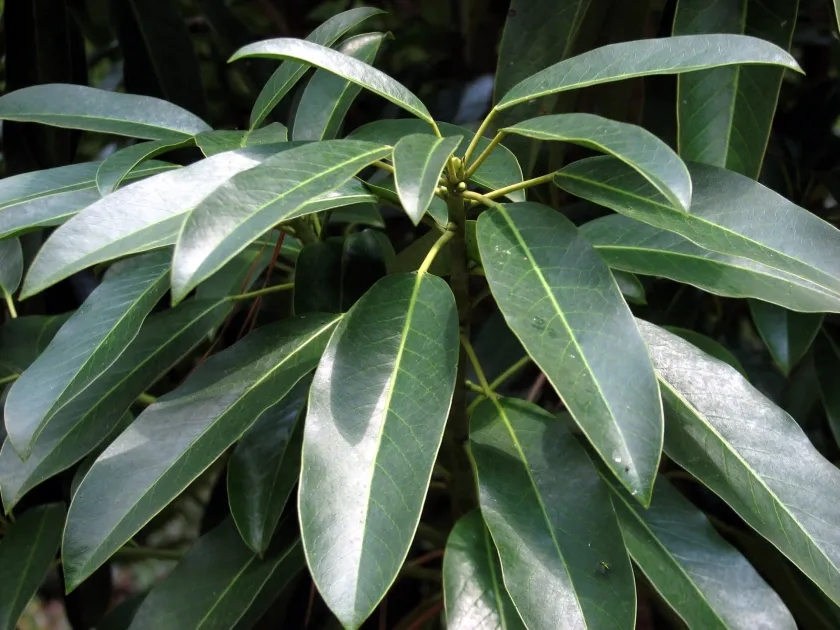
Description
Growing requirements
Daphniphyllum glaucescens is a distinctive evergreen shrub or small tree belonging to the Daphniphyllaceae family. It is native to East Asia, primarily occurring in the subtropical regions of Japan and China, where it thrives in shaded forest understories.
The plant performs best in acidic to neutral, moist, and well-draining soils. It requires a location protected from harsh, dry winds and direct intense sunlight, which can easily scorch its characteristic glaucous, leathery foliage.
Botanically, it is known for its slow growth rate and attractive leaf arrangement. The plant produces small, inconspicuous flowers, followed by drupe-like fruits. It is highly valued in horticulture for its year-round structural presence in gardens.
Climate requirements include a temperate to subtropical environment. While it possesses some hardiness, it generally prefers consistent temperatures and requires protection in regions experiencing severe winter frost to prevent tissue damage.
Agronomic management focuses on consistent soil moisture and organic mulching to maintain root health. Providing a balanced, slow-release fertilizer during the active growing season helps support the development of its dense, decorative canopy.
Main diseases and pests
Pathogen threats in Daphniphyllum glaucescens are often linked to improper drainage, which leads to root rot diseases. Ensuring the planting site has sufficient percolation is the primary defense against such soil-borne pathogens.
Insect pests, including scale insects and spider mites, can become an issue if the plant is stressed by heat or lack of humidity. Regular monitoring of the underside of the leaves is advised to catch potential infestations before they escalate.
Foliar diseases, while less common, can occur in stagnant, overly humid environments. Improving airflow around the plant through selective pruning is a standard cultural practice to mitigate the risk of fungal infections and maintain plant vigor.
Nutrient imbalances, particularly iron deficiency causing leaf chlorosis, can occur if the soil pH rises too high. Maintaining soil acidity is essential for the healthy appearance of this plant, as it directly impacts its ability to uptake necessary nutrients.
Effective management also includes seasonal sanitation, where dead or damaged wood is removed. This not only maintains the aesthetic quality of the specimen but also prevents the colonization of opportunistic pests or wood-decaying fungi.