
Himalayan Daphniphyllum
Daphniphyllum himalense
Description
Growing requirements
Himalayan Daphniphyllum (Daphniphyllum himalense) is an evergreen tree or large shrub belonging to the Daphniphyllaceae family. Originally native to the mountainous regions of the Himalayas, this species thrives in humid, shaded forest environments, which dictates its specific cultivation requirements.
The plant demands a temperate, mild climate and is sensitive to extreme frost, which limits its outdoor use to specific hardiness zones. It prefers sheltered locations where it is protected from cold winds that can damage its large, leathery, and dark green foliage during the winter months.
Cultivation requires fertile, well-draining soil with a tendency toward acidity. Moisture management is crucial: while the plant needs consistent soil humidity, waterlogging must be avoided to prevent root diseases, making soil structure and drainage amendments essential components of successful planting.
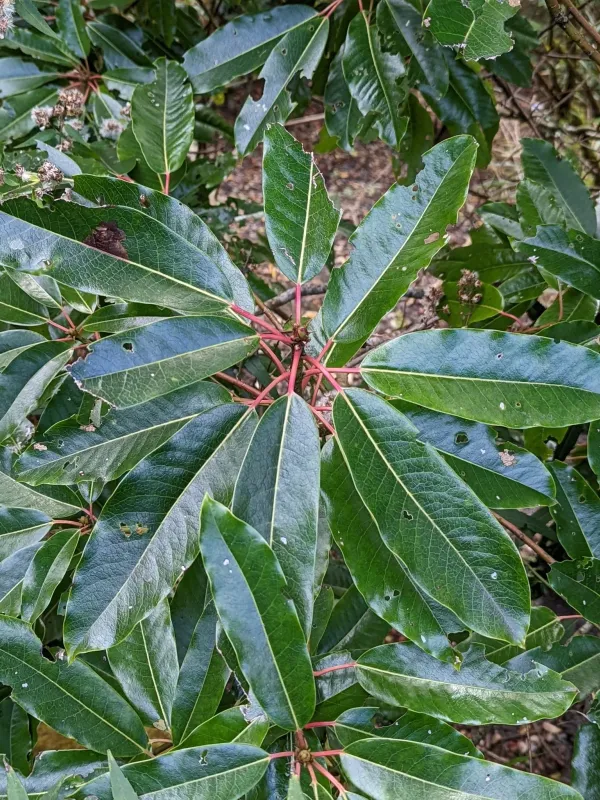
Botany-wise, the species is dioecious, meaning male and female flowers are borne on separate plants. The leaves are distinctively lanceolate and often show a glaucescent, whitish hue on the underside, which provides a striking visual contrast throughout the growing season.
In terms of agricultural and horticultural utility, Daphniphyllum himalense is primarily valued as an ornamental specimen. Its dense, broad-leaved canopy makes it ideal for architectural garden features, privacy screens, and evergreen structural planting in parks and large private landscapes.
Main diseases and pests
Common health issues for the plant include root rot caused by poor soil drainage and fungal leaf spots occurring in excessively humid or stagnant air conditions. Primary pests include scale insects and spider mites, which can cause significant stress to the plant during dry or warm spells.