
Cyrtorchis helicocalcar
Cyrtorchis helicocalcar
Description
Growing requirements
Cyrtorchis helicocalcar is a remarkable species belonging to the Orchidaceae family. Native to the tropical forests of Africa, it thrives as an epiphyte, attaching itself to the bark of trees in humid forest ecosystems.
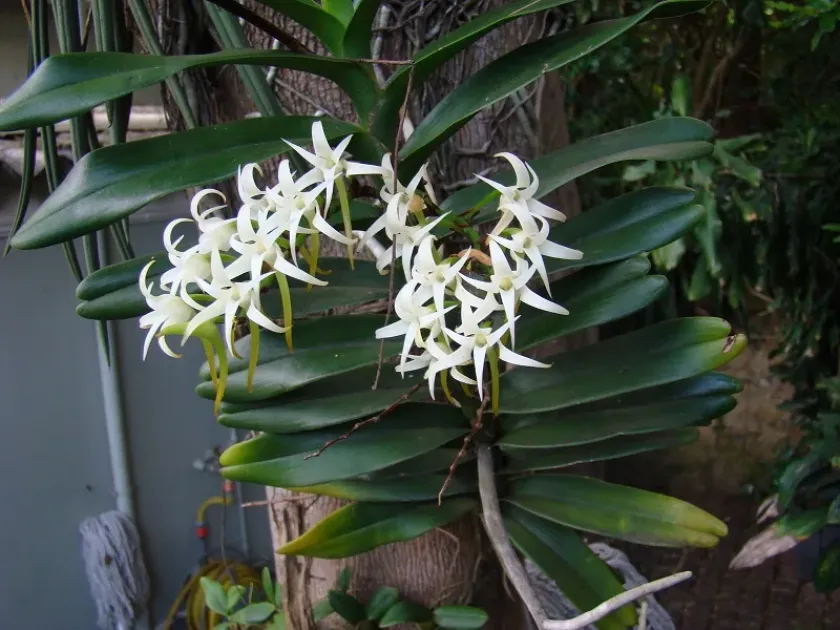
This species is characterized by its distinct, leathery leaves and fragrant, spurred flowers. It typically exhibits monopodial growth, meaning it grows from a single vertical stem, which makes it a unique addition to specialized plant collections.
The climate requirements for this plant are stringent. It needs a high ambient humidity level, ideally between 70% and 80%, to maintain its physiological functions. In indoor environments, this usually necessitates the use of a greenhouse or a humidity-controlled cabinet.
Temperature management is equally important. A consistent warm environment with daytime temperatures ranging from 22°C to 28°C is preferred. Dropping below 15°C for extended periods can cause severe stress and potential dormancy issues.
The growing substrate must facilitate rapid drainage. The root system requires significant air circulation, which is why coarse bark, perlite, and charcoal mixes are the standard choice for professional growers.
Main diseases and pests
The primary threats to Cyrtorchis helicocalcar are often rooted in improper cultural practices, specifically poor ventilation and excessive moisture leading to fungal infections.
Root rot is the most common ailment. It occurs when the potting medium becomes compacted or remains saturated for too long, depriving the roots of the oxygen they need to respire properly.
Scale insects are frequent pests that can infest the underside of leaves and along the stem. They are challenging to eradicate once established, requiring careful manual removal and targeted insecticidal treatment.
Spider mites represent another significant risk, particularly in drier, less ventilated indoor conditions. These tiny pests feed on cell sap, leading to yellowing of leaves and significant loss of plant vigor over time.
To maintain a healthy specimen, it is essential to monitor the plant for signs of stress, such as leaf wilting or discolored spots, and to isolate any plant that displays signs of infection to prevent the spread of pathogens.